
Fuel Price Hike Adds to Garment Industry’s Struggle to Stay Competitive
Staff Correspondent
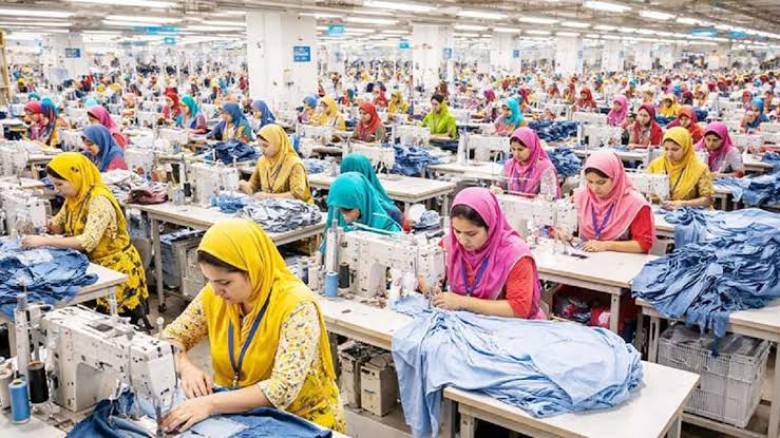
Amid gas and power shortages, rising production costs, declining orders and reluctance among international buyers to pay higher prices, the government has raised fuel prices again. With the prices of four types of fuel increasing by Tk 20 per litre, production, transportation and supply costs in Bangladesh’s ready-made garment (RMG) industry are expected to rise further.
Under the new prices, diesel will cost Tk 135 per litre, kerosene Tk 155, octane Tk 165 and petrol Tk 160. The prices were announced in a gazette issued by the Energy and Mineral Resources Division on September 20 and took effect from midnight that day.
Previously, diesel was sold at Tk 115 per litre, kerosene at Tk 135, octane at Tk 145 and petrol at Tk 140. Since 2024, fuel prices in Bangladesh have been adjusted under an automatic pricing mechanism, taking into account international market prices, import costs, taxes and duties, exchange rates and other factors.
Added Pressure Amid Existing Challenges
The RMG sector, the country’s leading source of export earnings, is already facing a number of challenges. In the 2025-26 fiscal year, garment exports earned $38.70 billion, down 1.64 percent from $39.35 billion in the previous fiscal year.
Of the total, knitwear exports amounted to $20.62 billion, while woven garment exports stood at $18.08 billion. The garment sector accounted for around 80.62 percent of the country’s total merchandise exports.
However, the sector recorded some positive growth during the first two months of the current 2026-27 fiscal year. Garment exports amounted to $7.50 billion in July-August, up 5.12 percent from $7.13 billion during the same period a year earlier. Knitwear exports grew 6.17 percent, while woven garment exports increased 3.81 percent.
Amid this growth, however, rising production costs are emerging as a major challenge, as industry stakeholders say securing higher prices from international buyers is not easy.
Production and Transport Costs to Rise
Mohammad Hatem, president of the Bangladesh Knitwear Manufacturers and Exporters Association (BKMEA), said the fuel price hike would increase costs for the garment industry on several fronts.
“Along with higher fuel costs at factories, transportation expenses will also rise. This will affect both imports and exports,” he said.
He said the fuel price hike could also add to overall inflationary pressure, potentially strengthening demands for higher wages across various sectors.
According to Hatem, international buyers are generally reluctant to pay higher prices even when production costs rise. In many cases, buyers instead put pressure on manufacturers to reduce prices each season. As a result, manufacturers cannot fully pass on the additional costs to buyers.
This could put further pressure on entrepreneurs’ profit margins and make it more difficult for weaker companies to remain in business, he said.
Focus on Reducing Costs
Mahbubuddin Rubel, a former director of the Bangladesh Garment Manufacturers and Exporters Association (BGMEA), said the government may have increased fuel prices to align them with international markets. However, he said businesses would need to look for opportunities to reduce costs in other areas to offset the impact.
“If fuel costs rise by Tk 20 but expenses can be reduced by Tk 30 elsewhere, overall competitiveness can be strengthened,” he said.
He suggested that improving productivity, reducing lead times and increasing value addition could help manufacturers cope with the additional pressure.
Rubel also said the fuel price hike could affect workers and ordinary consumers. Therefore, alongside keeping inflation under control, he said greater emphasis should be placed on strengthening competitiveness in areas where Bangladesh has domestic capabilities.
402 Factories Closed in Three Years
Another indication of the challenges facing the garment industry is the number of factories that have closed. A total of 402 garment factories shut down between July 2023 and June 2026, including 282 BGMEA-member factories and 120 BKMEA-member factories.
Industry stakeholders attributed the closures to several factors, including global demand, the domestic economic and political situation, and liquidity shortages in the banking sector.
During periods of gas shortages, many factories have had to rely on diesel-powered generators as an alternative source of energy. As a result, the fuel price hike could directly increase production costs. Transportation expenses and the cost of moving raw materials to and from factories could also rise.
At the same time, prices are often fixed when export orders are placed. Therefore, when fuel or transportation costs rise midway through an order, manufacturers cannot immediately pass the full additional cost on to buyers. This could further squeeze their profit margins.
Major Challenges Ahead
Garment exports growing by 5.12 percent during the first two months of the current fiscal year is a positive development for the sector. However, achieving the full-year target remains a major challenge.
The garment export target for the current fiscal year has been set at $44.50 billion, around 15 percent higher than the previous fiscal year’s earnings.
Achieving the target will require not only securing more orders but also maintaining production capacity, ensuring uninterrupted supplies of fuel and electricity, delivering products on time and keeping production costs competitive.
Development economist and energy expert Monowar Mostofa said the fuel price hike would affect the industrial sector. While many large industries use gas, they also depend on diesel for various purposes. Some small and medium-sized industries rely on diesel-powered generators.
As a result, higher diesel prices could increase their production costs, he said.
Mostofa said rising production costs could put pressure on the competitiveness of Bangladesh’s export-oriented products in international markets. Prices of domestically produced goods could also rise in line with higher production costs.
For the garment industry, therefore, the current situation is about more than simply calculating the additional Tk 20 per litre in fuel costs. The key question now is how significantly the price hike will affect production, transportation, wages and other expenses—and how effectively manufacturers can absorb the combined impact.
© 2025 Bangladesh Diary, All Rights Reserved
 Print
Print
 Save
Save