
Dengue Fear Grows as Testing Awareness Rises but Hesitancy Persists
Staff Correspondent
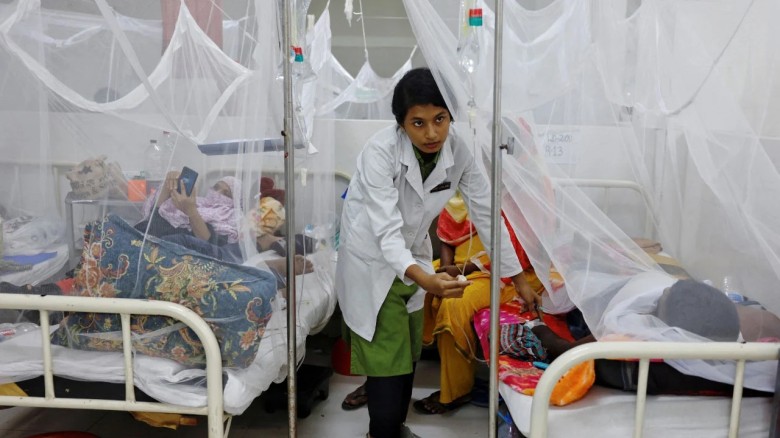
The number of people suffering from fever and body aches is rising in Dhaka and several other parts of the country. At the same time, as dengue cases increase, many people are rushing to hospitals for tests whenever they develop a fever. However, concerns remain over timely diagnosis and treatment as some people continue to self-medicate with medicines purchased from pharmacies, ignoring doctors’ advice.
A visit to several hospitals and diagnostic centres in the capital’s Mugda area last Wednesday found many fever patients seeking dengue tests. Some arrived alone, while others brought several family members with them.
Abdul Kader, a resident of Mugda, said he had initially taken medicine assuming his fever and body aches were caused by an ordinary illness. When the fever subsided and then returned, he eventually underwent a dengue test.
Suraiya Begum, a factory worker in Mugda, also went to hospital after suffering from fever and body aches for several days. Her dengue test came back negative. Her family members said they had to pay for several tests after seeking medical attention out of concern that she might have dengue.
Multiple Members of Same Family Falling Ill
Apart from dengue, many people are also suffering from various viral fevers amid changing weather conditions. In some cases, infections appear to spread from one family member to another.
Abu Taleb said six of the seven members of his family fell ill with fever around the same time. As one family member became sick after another, they suspected a viral infection but had the affected members tested for dengue to rule it out. All the test results came back negative.
However, awareness about the need for testing when someone develops a fever remains uneven. A man named Shahabuddin said he had developed a fever a few days earlier but recovered after taking common fever medication without undergoing any tests. In his view, if the fever goes away after taking medicine, there is little need to spend extra money on testing.
Doctors Urge Vigilance Even After Fever Subsides
Doctors say it is important to consult a physician when necessary to determine the cause of a fever. Particularly amid the rising prevalence of dengue, they advise people not to ignore fever and to seek appropriate testing and treatment at the right time.
Dr Nandita Pal, professor of medicine at Shaheed Suhrawardy Medical College Hospital, said patients should consult a doctor about dengue testing during the first few days of fever. She cautioned that the disappearance of fever does not necessarily mean the risk has passed, as complications can develop in some cases even after the fever subsides.
According to physicians, dengue diagnosis may require tests such as the NS1 antigen test, antibody tests and a complete blood count (CBC). Depending on a patient’s physical condition and symptoms, doctors may also recommend additional tests.
Dengue Cases Rise in September
According to data from the Directorate General of Health Services (DGHS), the number of dengue cases and deaths has risen significantly in September this year. The latest 24-hour figures cited in the report show that six people died of dengue while 1,868 new patients were admitted to hospitals.
So far this year, the DGHS has reported 201 dengue-related deaths and 67,367 cases.
© 2025 Bangladesh Diary, All Rights Reserved
 Print
Print
 Save
Save