
One Egg Costs Nearly Tk 15 as Dozen Prices Rise Again
Staff Correspondent
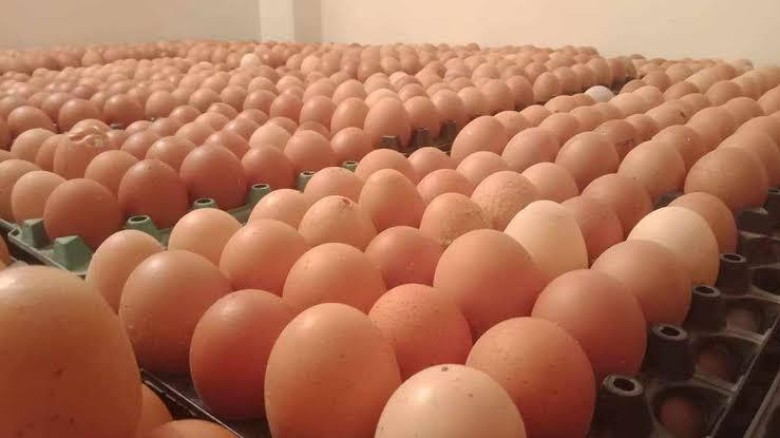
Egg prices have risen again in markets across the capital, with a dozen brown farm eggs now selling for Tk 155 to Tk 160 at retail shops. A four-egg pack costs around Tk 50 at larger markets but as much as Tk 55 at neighbourhood shops, meaning consumers buying eggs individually may have to pay nearly Tk 15 each.
Eggs and broiler chicken are among the main sources of protein for low- and lower-middle-income households. Broiler chicken prices have remained around Tk 200 per kilogram for nearly two months, while egg prices have now started climbing again.
Retailers said a dozen brown eggs are currently selling for Tk 155-160, up by around Tk 10 per dozen in the past week. A dozen white farm eggs costs Tk 145-155, while duck eggs are selling for Tk 190-200 per dozen.
Sellers attributed the higher prices to rising costs of poultry feed and medicines, transportation expenses and additional diesel costs for running generators during load-shedding. Some also said egg production tends to decline somewhat at this time of year due to excessive heat and humidity.
Kaiser Ahmed, managing director of Diamond Egg, said the price of poultry feed had increased by up to Tk 12 per kilogram over the past two months. Around one kilogram of feed is required to produce eight eggs, meaning feed costs alone for producing two four-egg packs have risen by about Tk 12.
He added that some feed ingredients are imported from the United States and their prices are relatively high for commercial reasons.
Annual Egg Production Reaches 24.41 Billion
According to the Department of Livestock Services, Bangladesh produced around 24.41 billion eggs in the 2024-25 fiscal year, putting annual per capita availability at slightly more than 137 eggs.
However, the Bangladesh Bureau of Statistics’ (BBS) 2022 Household Income and Expenditure Survey found that per capita daily egg consumption in the country stood at 12.7 grams, down from 13.6 grams in 2016.
Those concerned say there is a link between rising egg prices and declining consumption. The Russia-Ukraine war, which began in 2022, drove up prices of food and other commodities, also affecting the egg market. Whereas eggs previously sold for Tk 85-120 per dozen throughout much of the year, prices now generally fluctuate between Tk 125 and Tk 160. At times, however, prices have risen even higher, reaching Tk 200 per dozen in mid-October 2024.
According to the Trading Corporation of Bangladesh (TCB), a four-egg pack sold for Tk 50-55 yesterday, around 11 percent higher than at the same time last year.
Government Moves to Control Prices
The Ministry of Commerce held a meeting with stakeholders in the poultry sector on September 27 to discuss ways to control egg prices. Following the meeting, the ministry said the government would review the actual cost of egg production as well as the value addition and profit margins at different stages of the supply chain from producers to consumers.
Commerce Minister Khandaker Abdul Muktadir said an abnormal rise in egg prices directly puts pressure on low- and middle-income people.
Low-income consumers have also expressed frustration over the price hike. Shahana Akter, a resident of Tajmahal Road in Mohammadpur, said the price of liquid milk had increased a few days ago, following earlier rises in soybean oil, flour and sugar prices.
“Now that egg prices have also gone up, it is becoming even harder to manage the household food budget,” she said.
Prices Compared with Neighbouring Countries
According to Pakistan’s Bureau of Statistics, a dozen eggs currently costs the equivalent of around Tk 115 in Bangladesh currency. In Sri Lanka, the price is around Tk 138 per dozen, while a dozen eggs in Kolkata, India, also costs about Tk 115.
A 2024 study by the Bangladesh Trade and Tariff Commission (BTTC) found that the prices of day-old chicks, poultry feed and eggs were higher in Bangladesh than in India and Pakistan. The study attributed the price gap to import restrictions and protection provided to the domestic industry.
© 2025 Bangladesh Diary, All Rights Reserved
 Print
Print
 Save
Save