
Nine Years in Exile: Still Waiting to Go Home
A conversation with Rohingya refugee Misbahur Rahman, who fled Maungdaw in 2017 and has spent the past nine years living in Bangladesh, reflecting on displacement, life in the camps, the challenges facing Rohingya youth, and his enduring hope of returning safely to his homeland.
Interviewed by Sakibul Hasan
When I asked Misbahur Rahman about his life before 2017, he
spoke first about home. A Rohingya from Maungdaw, Rakhine State, Misbahur was
born and raised in Myanmar. His family lived with discrimination and
restrictions on movement, education and employment, but Myanmar was still their
homeland. They had a house, relatives, neighbors, a community and the ordinary
routines of everyday life.
Looking back, he says those ordinary moments have become
some of his most precious memories. “Before 2017, even though life was
difficult, I knew where I belonged,” he said to me. “After 2017, I became
someone living away from home and waiting for the chance to return.”
Fleeing for Survival
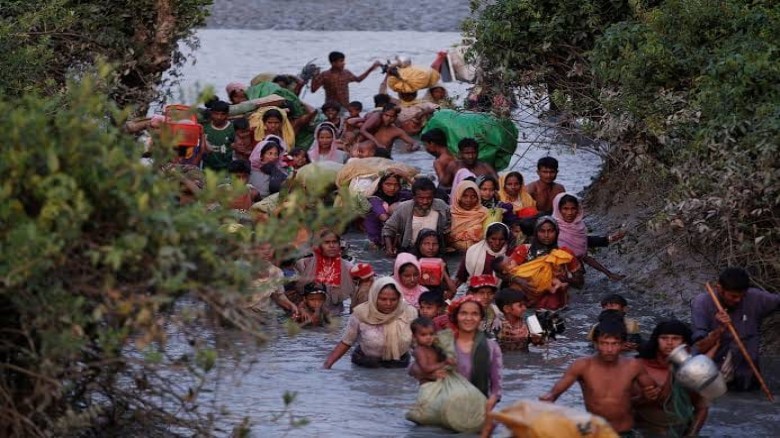
In 2017, violence made staying impossible. Misbahur and his
family fled Myanmar because they feared for their lives. He is clear that
becoming a refugee was never their choice. “We did not leave because we wanted
to become refugees. We left because we were trying to survive.”
Rahman remembers a frightening journey filled with exhausted
families, crying children and people carrying whatever belongings they could
save. The hardest part, he says, was the uncertainty of whether they would ever
see their homes again. They crossed into Bangladesh hoping that the
displacement would be temporary.
Nine Years in the
Camps
When the family arrived in Bangladesh, there was relief that
they had survived, but also the pain of leaving everything behind. Rahman initially
believed they would return home once the situation improved. Instead, one year
became two, then five, and eventually nine.
For him, the biggest hardship is not only the difficult
living conditions but the uncertainty. Families continue to face challenges
involving shelter, healthcare, education, safety and livelihoods. Humanitarian
assistance has been essential, but it cannot replace the opportunity to live
independently and plan for the future. “He says, survival is not the same as
having a normal life”. After nine years, the camps have become home to a
generation of children who have never experienced life in Myanmar.
A Generation Waiting
for Education
Education is one of Misbahur’s biggest concerns. Rohingya
young people have ambitions to become teachers, doctors, researchers and
community leaders, but opportunities remain limited.
Rahman believes displaced children should not have to choose
between survival and education. Many have the motivation and ability to learn
but lack consistent access to meaningful educational opportunities. “Education
is one of the most important ways to give a displaced generation hope,” he
says. He worries particularly about children born after 2017 who know Myanmar
only through stories told by their parents and grandparents.
When the Violence
Returned
The renewed fighting in Myanmar in 2024 brought back painful
memories for Misbahur. Hearing about violence and displacement around Maungdaw
made him think of his own escape. “For me, Myanmar is not just a country
mentioned in the news,” he says. “It is where I was born. It is where my memories
are. It is my homeland.” He worried about relatives and other families facing
the same fear his family had experienced in 2017. Being far away made the
situation even more painful. He wanted to help, but often could do little more
than listen, pray and hope that people survived.
Home Is Still
Maungdaw
After nine years in Bangladesh, Misbahur still considers
Myanmar his home. Bangladesh, he says, gave his family safety when they needed
it, and he remains grateful for that. But displacement has not erased his
connection to Maungdaw. “Home is not just a building,” he explains. “It is
memories, family history, community and the land where your ancestors lived.”
He wants to return, but not simply to cross a border and go
back to the same conditions. For him, return must be safe, voluntary and
dignified. Rohingya people need security, legal recognition, freedom of
movement, access to education and healthcare, and the opportunity to earn a
living. Most importantly, he wants assurance that his family will never again
have to flee.
More Than Refugees
Misbahur hopes the world will see Rohingya people as more
than refugees living in camps. They are a community with a history, culture,
identity and homeland. “We did not choose displacement. We did not choose to
live in camps. We did not choose to leave our homes,” he says.
Humanitarian assistance remains vital, but he believes the
crisis also requires a long-term solution based on rights, safety, justice and
opportunity. “A refugee camp should not become someone's permanent destiny.”
Still Holding on to
Hope
After everything he has experienced, Misbahur’s greatest
hope remains simple: to go home.
He wants to see Myanmar again, walk through the places
connected to his childhood and see Rohingya families living safely. He wants
children to attend school without fear and young people to have the opportunity
to build their futures. Nine years is a long time to wait, he admits. There are
moments when he wonders how many more years will pass. Yet he refuses to give
up hope.
His hope, he says, is not only for himself but for his
family, his community and the children growing up in the camps. He wants the
next generation to inherit more than the trauma of displacement—he wants them
to inherit their culture, resilience, knowledge and hope. And one day, he
hopes, he will return to Myanmar and no longer feel like a displaced person. He
simply wants to feel at home.
© 2025 Bangladesh Diary, All Rights Reserved
 Print
Print
 Save
Save