
Printed On: Nov 18, 2026 || Published On: Nov 16, 2026
Five Designated Water Routes Announced for Rash Purnima Festival at Dublar Char
Princh Mondal Olif, Bagerhat District Correspondent
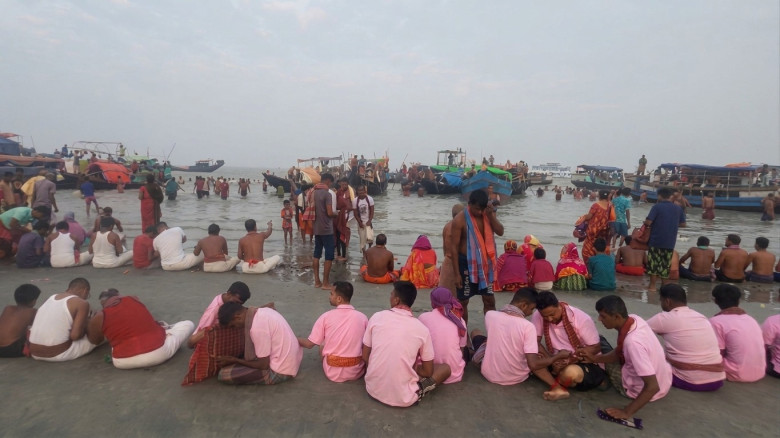
The Sundarbans West Forest Division has announced five designated waterways for pilgrims travelling to Dublar Char to attend the traditional Rash Purnima Puja and holy bath festival, scheduled to be held from November 22 to 24.
The Forest Department has introduced a series of restrictions to ensure the safety of pilgrims and protect the Sundarbans' fragile ecosystem and biodiversity during the three-day religious gathering.
According to Forest Department sources, only members of the Hindu community will be allowed to participate in the religious celebrations. Pilgrims must travel to Dublar Char by launch, trawler, speedboat or traditional boat, using one of the five officially designated routes.
Members of the Forest Department, Border Guard Bangladesh (BGB) and Coast Guard will remain on patrol and monitor the waterways during the festival.
Five designated waterways
The routes announced by the Forest Department are:
From Burigoalini and Kobadak through Batulanadi-Balnadi-Patkosta Canal and the Hongsoraj River to Dublar Char.
From Koyra, Kashiatana, Khasitana and Bajbaja through Arua Shibsa, followed by the Shibsa River and Morjat to Dublar Char.
From Nalion Station through the Shibsa and Morjat rivers to Dublar Char.
From Dhangmari or Chandpai Station along the Tin Kona Island route through the Pashur River to Dublar Char.
From Bogi through Baleshwar, Supati, Kochikhali and Shelar Char, reaching Dublar Char by a route outside the Sundarbans.
Mostaquim Billah, Assistant Station Officer of Chandpai Forest Station, said pilgrims would be permitted to enter the Sundarbans from November 22 to 24 in accordance with the Forest Department's instructions.
He said permits would be issued after payment of government revenue, including vessel entry fees and stay fees, based on the number of passengers. Applicants must submit a copy of their National Identity Card (NID).
He added that each permit would carry an official seal and specify the designated waterway. Pilgrims could choose any one of the five approved routes.
Vessels must begin their journey on the outgoing tide during daylight hours on November 22. Navigation along the designated routes will be allowed only during the day. Launches, trawlers and boats will not be permitted to stop anywhere except at designated Forest Department checkpoints.
Every vessel must carry an adequate number of life jackets or lifebuoys. Its registration or serial number, including the specified B, L and C/serial identification, and the number of passengers must be clearly displayed using paint or stickers.
Each pilgrim will receive a ticket or token upon entering the forest and must keep it throughout their stay.
All launches, boats and trawlers must also report to the control room established at Alorkol. Violations of the instructions may result in legal action.
Restrictions on weapons, plastic and noise pollution
For security reasons, carrying or using firearms and explosives inside the Sundarbans has been strictly prohibited.
Anyone found carrying firearms, explosives, deer-hunting traps, ropes, axes, saws or other illegal equipment will face legal action.
To protect the natural environment, the Forest Department has also prohibited single-use plastic plates, water bottles, glasses and spoons.
The use of microphones and loudspeakers, bursting firecrackers or fireworks, and other activities causing noise pollution have been banned aboard launches, trawlers and boats, as well as at the holy bathing site.
Pilgrims must carry the original copy of their National Identity Card or a certificate issued by their Union Parishad chairman when entering the Sundarbans.
The Sundarbans West Forest Division has urged all pilgrims to obtain the necessary permits from the relevant forest stations after paying the prescribed government fees and to strictly follow the designated waterways and all environmental and security instructions.
The department has also called for the cooperation of pilgrims to ensure a safe and orderly festival while protecting the Sundarbans' natural environment and biodiversity.
© 2025 Bangladesh Diary, All Rights Reserved
 Print
 Save