
Printed On: Nov 25, 2026 || Published On: Nov 25, 2026
Salinity Threatens Coastal Women's Health, Agriculture and Livelihoods
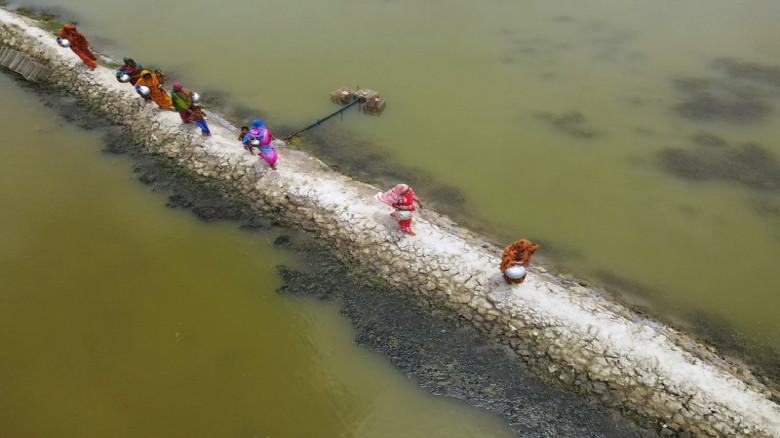
Women in coastal areas walk two to three kilometres every day in search of safe drinking water. As man move to other district for work, women are left with additional household responsibilities.
Sakibul Hasan
For 36-year-old Ayesha Akter, every morning starts another day of hard work. After waking up and attending to housework, she has to leave home looking for safe drinking water. she walks around two to three kilometres to collect drinking water. After returning home, Ayesha has to prepare cooking, carrying for her children and managing other household responsibilities await her.
With many male family members leaving for other districts in search of work. Including jobs in bricks kilns, women like Ayesha are left to shoulder almost all the responsibilities at home. This has become their everyday reality.
Across coastal communities, many women face a similar struggle. Alongside the shortage of safe drinking water, the migration of man for employment is increasing women's domestic workload and unpaid labour.
Water is Abandon, but Safe Drinking Water is Not
In the coastal district of Satkhira, Khulna and Bagerhat, rivers, canals and ponds are wide spread, yet water from many of the sources is not safe for drinking.
Several organisations have established local water supply facilities. However, many operate on fixed schedules, causing large crowds to gather when the supply is switched on. This often leads to long waiting times and difficulties in collecting water. Many women still have to walk two to three kilometers every day to meet their household water needs.
A study named "Coastal saltiness in Bangladesh: Community perceptions about water scarcity and health impacts," published in the journal of Coastal Conservation on August 5, 2026, examined the situation in three districts of southwestern coastal Bangladesh.
The study found that even deep tube-wells in many areas produce saline water. As a result, households rely on distant water sources, purchased water or rainwater stored during the monsoon. Salinity increase during the dry season, from November to May, and may reach its peak between March and May.
Sodium in Drinking Water Raises Health Concerns
One of the most concerning consequences of water salinity is its impact on public health. A study published in BMJ Open on July 1,2026, examined the relationship between sodium concentrations in drinking water and blood pressure among women in coastal Bangladesh.
The study found that the average sodium concentration in tube-well water was 933 milligrams per litre. Around 22% of the participating women consumed water that, at an intake of two litres per day, could provide nearly 94 percent of the World Health Organisation's recommended maximum daily sodium intake.
Rising Health and Livelihoods Risk for Women
The burden of collecting water, exposure to saline water and limited access to adequate hygiene are increasing health risk for women.
A 2025 published in Frontiers in Public Health, focusing Shyamnagar in Satkhira, interviewed 25 women and five married man. Opinion from healthcare workers and medical professionals where also collected. The study documented experience of skin problems, urinary tract infections, reproductive health complications, dehydration and psychological stress.
Water and Climate expert professor Ainun Nishat, emeritus professor at BRAC University,
has warned that Bangladesh needs to rethink its approach coastal water management, soil salinity and livelihoods. He cautioned that without effective long-term measures, more people could be forced to leave coastal areas in search of better living conditions.
Migration is reshaping Family Structures
Due to limited employment opportunities, many men move to other districts for work in bricks kilns and other labour intensive sectors. In their absence, women manage cooking, childcare, water collection and almost all other household activities. Consequently, they have less time for rest income generation.
These changes also affect children's education, family relationships and local economic activities. However, saltiness is not the only reason behind migration. Poverty, unemployment, cyclones, river erosion and land ownership also influences these decisions.
Sustainable Water Management Is Necessary
Rainwater harvesting, pond water treatment, suitable deep tube wells, reverse osmosis technology and locally managed water supply systems can play an important role in addressing the crisis.
A 2025 study found that a pilot project had provided safe drinking water to 20,000 people through the installation of reverse osmosis plants and rehabilitation of pond sand filters. The project also reported fewer waterborne diseases, reduce household expenses and improvements in living conditions.
The environmental said that, addressing saltiness stronger blood pressure screening, maternal and reproductive Healthcare services at local health Centres. Regular monitoring of drinking water quality is also necessary. Simultaneously, promoting salt tolerant crops, conserving fresh water and protecting the natural flow of rivers are essential.
They also say, most importantly, the time and effort send collecting water must be recognised in development planning. women's opinions should be considered when setting water supply schedules, while equal access to safe drinking water must be ensured.
The cost of salinity in coastal Bangladesh cannot be measured only through lost farmland or damage crops. It consequences are also be reflected in people's health, women's unpaid labour, food insecurity and the feature of the next generation.
As seawater continues to move towards the coast, the effects of saltiness are gradually becoming more deeply rooted in people's health, livelihoods and social condition.
© 2025 Bangladesh Diary, All Rights Reserved
 Print
 Save