
Pressure: Discomfort of the freedom of journalism in Bangladesh.
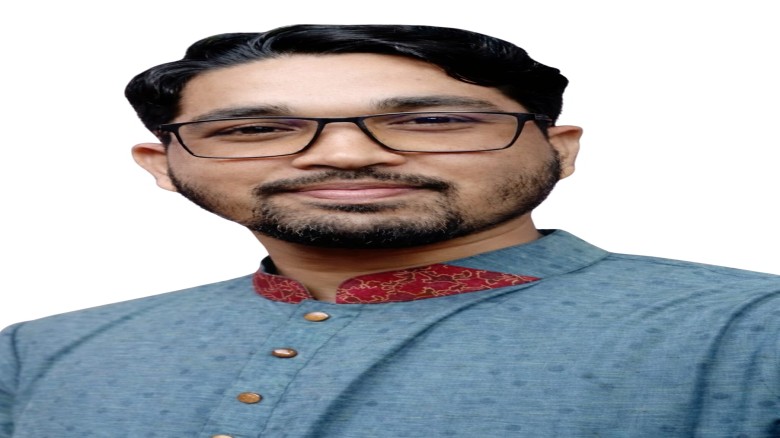
Md. Monirul Islam
Media acts as a mirror of a
country, and the world. The role of media in Bangladesh is also skyrocketing.
Media has long been considered as the "Fourth Pillar" to protect the
independence and democracy of Bangladesh. On the other hand, in reality it is
going through various pressures, and limitations.
In particular, freedom of expression of opinion and news—in both these
cases, there are major challenges in front of journalists. As a result, the
process of bringing the truth is often hindered, which is always a threat to
democracy. The incidents of attacks during the gathering of news in our
meetings are not less.
Especially in any movement for democracy and people's rights. 10 senior
journalists have done field work from the senior journalists regarding the
challenges of journalists, they have also shared various problems and
challenges which are a wall to suppress the progress and democracy of a
country. Challenges and problems include political influence, narrative
establishment, personal interests, adequate training of journalists and lack of
pay as well as some discrimination. In this way, they are bringing forward
various issues. Some of the important obstacles are mentioned among them-
1. Political pressure: Political and institutional pressure has been
going on for ages as a major obstacle to the freedom of journalism in
Bangladesh. It is seen at various times that journalists are faced with
threats, harassment or professional uncertainty when they publish reports
against ruling or influential groups. By doing this, many journalists are
discouraged from working on important issues. As a result, many important
issues of the media do not come up properly. On the contrary, the hands of the
criminals are strong.
2. Legal Pressure: A two-pronged reality has also been created for
journalists in terms of the legal structure of Bangladesh. Although various
laws, including the Digital Security Act, are formed on the one hand to
suppress cyber crime, on the other hand, the application of these laws is
creating restrictions on freedom of expression in many cases, there are
questions from various media. Many journalists complain that such legal risks
force them to self-control, so they cannot reveal the full truth.
3. Expansion of local influence: The practical experience of marginalized
people, and field-level journalists makes this crisis even more evident.
Especially the journalists of the district, and upazila level work at
relatively high risk. Local power centers, business groups or administrative
pressures have a direct impact on them. In many cases they do not have
effective measures to ensure their safety, which makes the situation more
complicated.
4. International Pressure: Media workers are always undermined by
personal and family insecurities due to fear of hegemony.
5. Ownership Influence: For a long time many media organizations have
been achieving business or political interests. In order to protect this
interest, there is a deep pressure to publish news. As a result, editorial
freedom is not fully effective. Forced to be stuck in bias. Many important news
are deliberately dropped or changed, which are in conflict with the basic
principles of journalism and ethical. Concerns have been expressed about the
freedom of journalism in Bangladesh in various indicators.
Although these indicators are
debated, they highlight the position of the country in a global context and
bring the problems into discussion. But there are positive aspects in this
crisis. Many journalists are still working bravely while maintaining professional
ethics. For example, the tendency to work from investigative journalism,
information-based reports and social responsibility still exists, which shows a
ray of hope. Some effective steps are needed to overcome this situation.
First to ensure the safety of journalists and stop unreasonable
harassment against them. It is possible to prevent this problem and dealing
with political parties, organizations and businessmen if they get
encouragement.
Next, the legal framework must be reformed in such a way that it does not
limit freedom of expression but protects it. Besides, it is necessary to have
an attitude that journalists and law and order are wrapped on the same surface.
Finally, a culture of maintaining freedom and professional standards should be developed
within media organizations. So that independent journalism becomes essential in
a democratic society.
For this, view business, information laundering, illegal transactions and
immorality should also be stopped. Only then will a media get freedom and the
country will get the spontaneity of the people. Therefore, to strengthen the
development and democracy of Bangladesh, there is no other other medium except
to ensure the freedom of journalism.
The writer a Law student and young
researcher
© 2025 Bangladesh Diary, All Rights Reserved
 Print
Print
 Save
Save