
Recovered Tigress to Return to the Sundarbans After Six Months of Treatment
Princh Mondal Olif, Bagerhat District Correspondent
A Royal
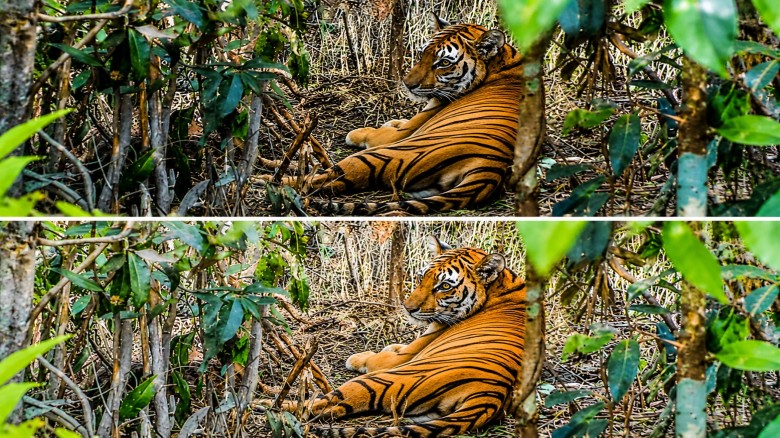
Bengal tigress rescued after being critically injured in a poacher's snare is
set to return to the Sundarbans following nearly six months of treatment and
rehabilitation. The Forest Department plans to release the animal on July 12 in
the forest near the Andharmanik Ecotourism Centre under the Chandpai Range in
Bagerhat.
The tigress
was rescued on January 3 after becoming trapped in a snare allegedly set by
deer poachers. She was taken to the Wildlife Management and Nature Conservation
Division's rehabilitation centre in Khulna, where she underwent intensive
medical care. According to the Forest Department, the deep wound on her front
left leg has completely healed, and she has regained her physical fitness.
Following a
final health assessment, a medical board approved her release into the wild,
describing it as an important step toward maintaining the ecological balance of
the Sundarbans.
Despite the
successful recovery, wildlife experts have expressed concerns about the
tigress's survival after release. They believe that hunting independently,
defending herself, and reclaiming her former territory could prove challenging
after spending months in captivity. There is also a possibility of territorial
conflict if another tiger has occupied her previous range.
To monitor
her movements, the Forest Department is installing 20 camera traps across an
eight-kilometre area. Ten cameras have already been placed, while the remaining
units are expected to be installed before the release.
Divisional
Forest Officer (DFO) Rezaul Karim Chowdhury said the camera traps would help
monitor the tigress's movements and behaviour after reintroduction.
Wildlife
expert Dr. Reza Khan, however, noted that camera traps alone are not enough. He
stressed that a more comprehensive scientific assessment of prey availability
and habitat suitability before release would have further reduced potential
risks.
Forest
officials believe that if the reintroduction proves successful, it could serve
as a valuable model for the future rescue, rehabilitation, and release of
injured wildlife in the Sundarbans.
© 2025 Bangladesh Diary, All Rights Reserved
 Print
Print
 Save
Save