
Printed On: Sep 28, 2026 || Published On: Aug 18, 2026
River Erosion destroys communities, Displaces Thousands of Families
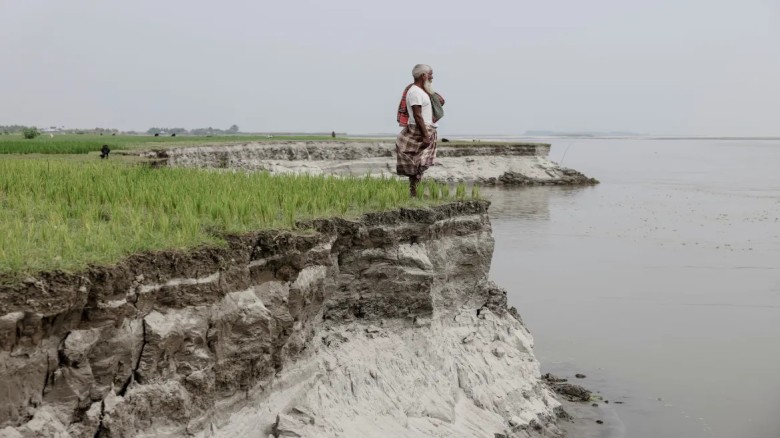
More than 20 districts face a high risk of river erosion
Around 8,700 hectares of land disappear into rivers every year
An estimated 100,000 - 200,000 people are displaced annually
The Jamuna (Brahmaputra) River accounts for nearly 55% of the country's total riverbank erosion
Only 820 of 4,200 km of vulnerable riverbanks have permanent protection
Sakibul Hasan
"The greatest pain is losing your homestead. When you lose your home, you lose your land, livelihood and memories along with it. Eventually, people are forced to leave their birthplace and start their lives all over again somewhere else," said Rafi Ahmed.
Rafi Ahmed from Ramna Khamar village in Chilmari upazila of kurigram, these are not mere words but a reflection of his family's decades-long experience of displacement caused by the Brahmaputra river's erosion. Around 40 years ago, his maternal grandfather lost his homestead several times before eventually leaving northern Bangladesh and settling in Dakkhin Haidgaon village of Patiya upazila in Chattagram.
The story of his family reflects the reality faced by numerous families living alone Bangladesh's rivers. The country's rivers are crucial to its economy, agriculture and sources of income but they also bring severe hardship to a large number of people annually. Riverbank degradation destroys homes, roads, farmland, educational institutions, markets and sources of lifehood, forcing countless families to search for new places to live.
According to government data and research, Bangladesh loses an average of 8,700 hectares of land to river erosion every year. As a result, an estimated 100,000 to 200,000 people are directly displaced just a year. Recent studies also suggest that more than 500,000 people in the Padma, Jamuna, and Meghna river basins are forced to relocate temporarily or permanently each year.
More than 20 districts across the country remain highly vulnerable to river erosion. Around 2,400 kilometres of riverbanks are at risk, while 30 to 40 percent of Bangladesh's population lives in riverine areas, making the impacts of erosion widespread.
River erosion is far more than the loss of land. It is a social and economic crisis.Productive farmland, educational institutions, road, trees, markets and place of worship disappear into the rivers. families lose their primary sources of income, poverty deepens, unemployment rises and many children are forced to interrupt their education.
Eperts estimate that the Jamuna river long alone erodes about 4,8000 hectares of land annually, accounting for around 55 percent of the country's total riverbank erosion. Research also indicates that although Bangladesh has nearly 4,200 kilometers are protected by permanent riverbank production structures. Consequently new communities to face erosion every year.
Experts attribute the growing severity of river erosion to shifting river channels excessive sedimentation, strong upstream flows, climate change, inadequate river management, and in some areas, illegal sand mining.
The Bangladesh Water Development Board (BWDB) has implemented riverbank protection projects in several parts of the country. However experts argue that existing protective measures cover only small portion of vulnerable riverbanks, leaving many communities exposed to erosion every monsoon season.
Rafi Ahmed said embankment have reduced erosion in parts of his area, but damaged sections have allowed erosion to resume elsewhere. He also noted that his family received little institutional support, relying instead on the assistance of local residents during difficult times.
River and environmental experts stress that embankments alone cannot provide a listing solution. They recommend integrated river basin management, scientific riverbank protection, preserving natural river flow, preventing illegal sand extraction and encroachment, planned dredging, improved early warning systems and sustainable rehabilitation programmes for affected communities.
Behind every statistic lies the story of a family that has lost its home, land and future. For thousands of Bangladeshis displace each year, river erosion means not only economic hardship but also the loss of identity and social ties.
The experience of Rafi Ahmed's family reflects the reality face by countless others across the country.
River erosion is not merely a natural disaster; it is a long-term humanitarian, economic and environmental challenge. Without effective river management, science-based protection measures and sustainable rehabilitation, Bangladesh will continue to lose communities, livelihoods and generations of hope to its rivers.
© 2025 Bangladesh Diary, All Rights Reserved
 Print
Print
 Save
Save