Dhaka

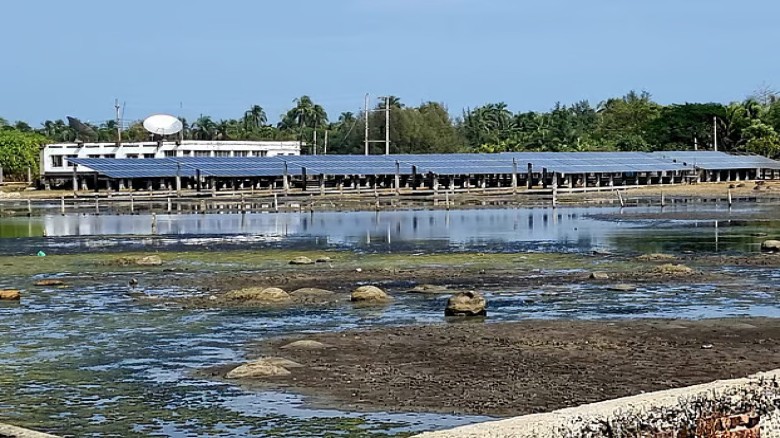 Photo: .

The government-run power plant operated by the Bangladesh Power Development Board (BPDB) on St Martin’s Island in Cox’s Bazar has remained out of operation for 32 years. Electricity supply on the island currently depends largely on a privately operated solar power project. However, citing increased demand during the tourist season and the rising cost of running generators, Blue Marine Energy Limited, the company operating the project, has announced a Tk 10 increase per unit of electricity. The announcement has sparked dissatisfaction among local residents and business owners.
In the 1980s, the BPDB established a generator-based power plant on approximately five acres of land south of the lighthouse in the western part of Uttarpara on St Martin’s Island to provide electricity to residents. Using two generators, the plant supplied electricity to around 600 customers for a few hours each evening.
The plant was severely damaged by a cyclone in May 1994. At the time, more than 150 electricity poles collapsed and power lines were severed. The plant has not resumed operations since then.
Later, on February 1, 2019, a 250-kilowatt solar power project was launched through a private initiative on approximately two acres of land in the Konapara area of the island. Blue Marine Energy Limited implemented the project at a cost of around Tk 200 million, installing 915 solar panels.
The company claims that the project currently supplies electricity to around 1,000 customers. These include 140 hotels, 20 restaurants, 600 households, 157 shops, six irrigation pumps and 15 electric three-wheeler charging points.
With St Martin’s Island reopening to tourists on November 1, concerns have emerged over rising electricity demand. Local sources say daily demand during the tourist season could reach 400 to 500 kilowatts. As the project’s current generation capacity is insufficient to meet this demand, the operator has had to rely on generators.
According to customers, residential consumers currently pay Tk 42 per unit of electricity, while commercial consumers pay Tk 52. An additional Tk 10 per unit has been announced for both categories from November 1. As a result, residential rates will rise to Tk 52 per unit and commercial rates to Tk 62.
On the afternoon of October 21, more than 150 customers staged a human chain and protest rally in front of Euro Bangla Resort on the island, protesting the proposed price increase. Speakers included St Martin’s Union BNP President Md. Nurul Alam and Javed Iqbal, a former joint convener of Teknaf Upazila Chhatra Dal, along with other local residents.
Nurul Alam said the current electricity rates were already too high for customers. He said the announcement of a further Tk 10 increase per unit had sparked anger among residents.
Hotel owners Abdur Rahim and Rahim Ullah alleged that customers were also dissatisfied with various deductions from prepaid meter balances during recharging and the collection of meter charges, in addition to the electricity price increase. According to them, the project had initially been launched with a promise of affordable and uninterrupted electricity supply.
Several other local customers said high electricity prices and irregular supply were adding to their difficulties. They said the situation was placing financial pressure not only on residents but also on businesses and establishments dependent on tourism.
Regarding the price increase, Blue Marine Energy Limited...
Note: The provided Bengali text ends mid-sentence in this section, so the remainder of the company's statement could not be translated.