Around 1.3 million trees in Dhaka
4,296 tress cut in one year
36.5% decline in green in 30 years
Green space in South Dhaka down to 9.5%
Dence vegetation down to just 0.3%
Source: Majumdar et al., Scientific Reports, 2026- Dhaka Urban Tree Inventory: RDRC and
Green Voice 2024-25 media-monitoring report; DSCC green-space assessment, 2019-2021.
Sakibul Hasan
In the capital, trees are being cut one after another amid road development, infrastructure construction and rapid urbanization. In the first year alone, 4,296 trees were cut in the capital. This figure comes from a joint media-monitoring reported by by the River and Delta Research Centre RDRC) and green voice, covering the period from April to 2024 to April 2025. The figure ,however, is not based on the field level census of every tree cut; it was complied by monitoring tree-failing incidents reported in the media. Research say the actual number could be higher.
Simultaneously, the overall picture of Dhaka's green cover is also concerning. A 2026 study published in Scientific Reports, the first comprehensive urban tree Inventory of Dhaka, found that the capital currently has an estimated 1.3 million trees, with overall tree cover below 11%. The study identified 110 species. The research used the i-Tree Eco model to assess the number of urban trees and their ecosystem benefits.
The study found that Dhaka's stress provide ecosystem benefits work an estimated US$6.74 million annually and store carbon worth approximately $3.19 million. This estimates take into account service such as shade, removal of air pollutants, stormwater management and carbon storage.
The picture from Dhaka South City Corporation (DSCC) over the past 30 years is even clearer. A study published in the journal Land in 2024 used Landsat satellite imagery, supervised classification and NDVI analysis to assess change in green space. It found that 46% of the DSCC area was green in 1991. The figure fell to 21.3% in 2001, 19.7% in 2011 and just 9.5% in 2021. The study reported a 36.5% reduction in vegetation cover between 1991 to 2021
The condition of dance vegetation is even more striking. According to the study, 13.6% of the DSCC area was covered by dense vegetation in 1991. The figure declined 2.3% in 2011, o.9% in 2011 and just 0.3% in 2021.
As Trees Decline, Urban Heat Rise
The impact of Dhaka's shrinking green cover is not limited to the loss of greenery. The 2026 Scientific Reports Study, citing finding from an earlier satellite-based study said that between 2000 and 2020, Dhaka's vegetative cover declined by 5% while built-up areas increased by 14%. During the same period, land surface temperature increased by 7.14°C.
An important distinction ,however, is that the 7.24C increase refers to land surface temperature not a temperature measured by weather stations or the temperature directly experienced by people. News report should not describe therefore the finding simply as "Dhaka's temperature increased by 7.24C."
How Many Trees Are Replacing Those being Cut?
Against the backdrop of Dhaka's declining three cover, the key question is how many of the trees being cut are being replaced and how many of the newly planted saplings ultimately survive.
The recent urban tree inventory provides a baseline estimate of around 1.3 million trees in Dhaka but it doesn't provide a continuous citywide record of how many trees are cut every year or how many replacement trees survive. consequently, it is difficult to determine how much of the actual loss from tree felling is being compensated for.
This is also concern from an environmental perspective. Even if several saplings are planted to replace a large mature tree, they cannot immediately provide the same level of ecosystem benefits. Mature tress provide significantly grater shade, carbon storage, air-purification and storm water Management services than newly planted saplings.
Therefore, Dhaka's loss of green cover is not merely of changing urban aesthetics; it is link to heat stress, air quality, waterlogging, the walking environment and overall urban liveability. Research show that as built-up areas expand, green cover is declining. And the figure of 4,296 tress cut in the past year indicates that the pressure on the city's stress continues.
News Published By:
Bangladesh Diary

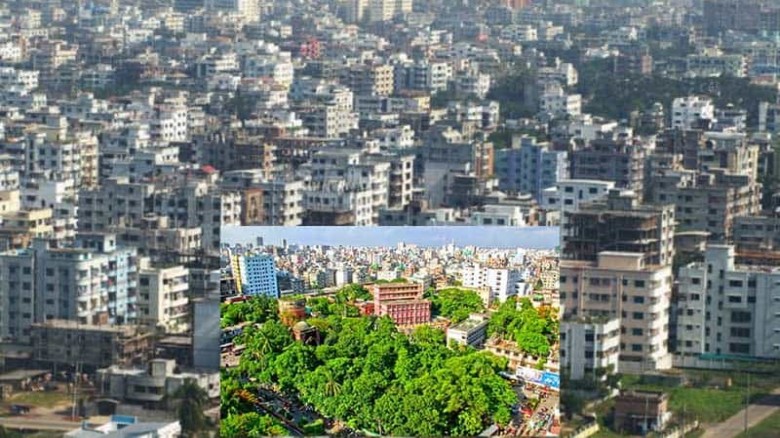 Photo: Collected