Dhaka

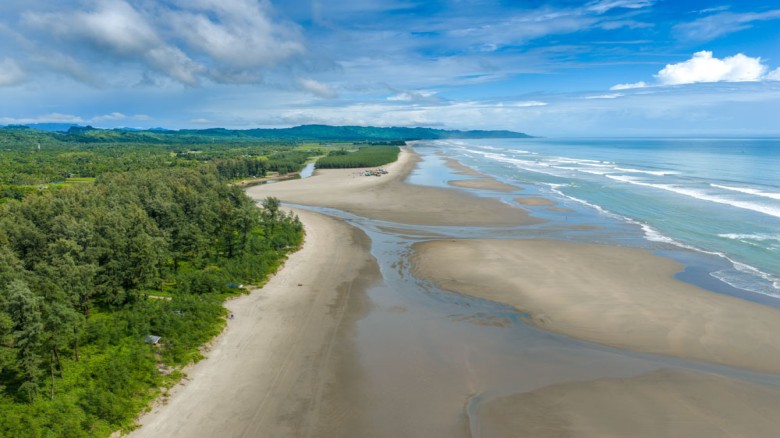 Photo: Muhammad Amdad Hossain

Rising salinity, changes in river flow and ocean warming are placing increasing pressure on Bangladesh's coastal ecosystems. Understanding how these changes are affecting marine biodiversity and the way of income has become increasingly urgent.
Sakibul Hasan
The Sundarban of Bangladesh is the world's largest
contiguous mangrove forest. Its rivers, creeks and tidal ecosystem support
plenty of spaces of fish, birds, mangrove plants and wildlife. The forest is a
great source of food and livelihoods for coastal communities as well it’s
serves as an important natural buffer against natural disaster. Climate change,
rising sea levels, changes in freshwater flow from rivers and increasing
salinity, however, are putting this environmental balance at risk.
The problem is not limited to this forest. The forest is
connected to the broader marine environment of the Bay of Bengal through rivers
and coastal waters. Consequently, fish habitats, species disruption and the
livelihoods of people who depend on marine resources may be affected for the
environmental changes.
Salinity Changes Are
Reshaping the Sundarbans
According to the journal environmental Monitoring and
Assessment in 2025 analyzed long-term changes in salinity in the Sundarbans of
Bangladesh. The research identified a rising salinity trend in some parts of
the forest, after 2010. The availability of freshwater from rivers is one of
the key factors influencing these changes.
Another research published in 2017 used modeling to analyze
possible changes in the distribution of mangrove specially by 2025 consequently
climate change and water salinity. The findings indicated potential risk to the
Sundari tree, while predicting that some more salt-tolerant species could gain
suitable habitats.
Though the forest appears green from the outside, these
research give us as a remainder that changes maybe occurring in its species
diversity and ecological balance. Research-based projections should not be
treated, however, as direct evidence of changes that have already happened.
Bay of Bengal Biodiversity
and Costa livelihoods
It's important for protecting Bangladesh's marine biodiversity by the ecological connection between the Sundarbans and the Bay of Bengal. Changes in Ocean temperature and water characteristic may change the distribution of marine species, their food and the environmental situations suitable for reproduction. Simultaneously, pollution, overfishing and the deceasing of habitat can place extra pressure on marine life.
These impacts may be affected the lives coastal communities. By changing fish abundance and seasonal fishing patterns could threat fishers in common food security. determining the actual scale of these changes, however, need an analysis of fish catch statistics, species-specific surveys and environmental data from the relevant areas.
Connecting Science,
Local Experience and Policy
Conservation of the biodiversity of the Sundarbans and the
Bay of Bengal cannot be done simply by recognizing the problem. It is important
to know the reasons behind environmental changes and the impact of such
changes. It is also important to gauge the efficiency of the present policies
of conservation. It’s important to monitor the factors like mangrove coverage,
river dynamics, salinity, and fauna in the case of the Sundarbans. In the case
of the Bay of Bengal, it is important to conduct studies along with ensuring
transparency of the data relating to marine ecosystems, fisheries, and the sea
life as a whole. The combination of local knowledge, scientific research,
governmental data, fishermen’s experience, and environmental data results in a
fuller picture of the situation. This allows recognizing the ecological changes
and developing a better policy of conservation.
Evidence of Change
Must Be Sought Close to the Sea
To understand the impacts of climate change needs analyzing the experience of forest dependent communities in the Sundarbans, researcher, coastal fishers and government official as well as scientific data. This investigation Should examine differences in salinity across various parts of the Sundarbans, changes in fish species and fishing patterns and the relevant roles of climate change, pollution, river flow and fishing pressure.
It’s definitely important to investigate which communities are most affected by these changes and the expend to which local people are involved in conservation and adaptation initiatives. It is possible to show an actual picture of crisis, at the same time the limitation and possibilities of potential solutions by analyzing long-term environmental data, local interviews and the effectiveness of government policies.
Why Bangladesh's Role
in International Ocean Conservation Matters
The agreement of BBNJ known as the High Seas Treaty has
established an international framework for protecting biodiversity in areas of
the ocean beyond national jurisdiction. At its first conference, discussions on
environmental Impact assessment, marine protected areas and countries' shared
responsibilities for marine conservation will be crucial. Though This
initiative is relevant to a coastal country like Bangladesh, the treaty will
not directly solve environmental challenges in the Sundarbans, costal fisheries
or Bangladesh national waters. Scientific monitoring, effective domestic
policies and local cooperation are also important in these areas. Therefore,
the key questions are how International marine conservation initiatives can
contribute to protect biodiversity in the high seas and how Bangladesh can
participate in this process while advancing its maritime interest and
conservation priorities.
Changes in the Ocean Mean Changes in People's futures
Protecting biodiversity in the Sundarbans and the of Bangal rely on addressing the impacts of promoting sustainable fishing, climate change, conserving habitats and implementing effective policies. Though research has given insight into changing salinity in the Sundarbans and the possible risk facing mangrove species, more long-term data and research Are needed to understand broader changes in marine biodiversity and their specific impacts on coastal the way of income.
This requires examining fishers' experience, scientific
observations changes in forest ecosystems and the practical outcomes of
conservation policies together. The rule of journalism is to check or verify
information from different source, present diverse perspective and hold
conservation initiatives accountable for their effectiveness and limitations.
Changes in the ocean affect not only nature but also fishers' livelihoods, food
security in coastal communities and future generations. Connecting local
experience, science and policy decision can help making these changes more
visible and understandable