According to the Bangladesh Bureau of Statistics’ (BBS) National Child Labour Survey 2022 and the Bangladesh Sangbad Sangstha (BSS), more than 3.5 million children aged 5–17 were engaged in economic activities in Bangladesh. Of them, more than 1.776 million were involved in child labour, while 1.068 million were engaged in hazardous child labour. Although the rate of hazardous child labour declined from 3.2 per cent in 2013 to 2.7 per cent in 2022, the overall number of children in child labour increased. Many children also face challenges in continuing their education alongside work.
Sakibul Hasan
Eleven-year-old Rahat works as a conductor on a leguna travelling from the Section area of Azimpur to Gulistan, hanging off the back of the vehicle. He works for nine to ten hours a day, from morning until night, earning Tk 300–350 daily. Hanging outside a moving leguna to collect fares puts him at considerable risk.
Rahat once attended school. But his father’s illness and the family’s financial hardship forced him to leave his studies and start working to help support the family. Like other children, he dreams of becoming educated. “I also want to study and become educated. But my father is ill, and my family is struggling financially. That is why I have had to choose this path,” Rahat says.
His daily struggle cannot be dismissed as an isolated incident. According to the Bangladesh Bureau of Statistics’ National Child Labour Survey 2022, approximately 3.536 million children aged 5–17 in the country were engaged in work. Of them, 1.776 million were involved in child labour, while 1.068 million were engaged in hazardous child labour.
In other words, nearly nine out of every 100 children aged 5–17 in Bangladesh were engaged in some form of economic activity, while around four out of every 100 fell within the category of child labour. According to the BBS, the child labour rate stood at 4.4 per cent in 2022, compared with 4.3 per cent in 2013. During the same period, the rate of hazardous child labour declined from 3.2 per cent to 2.7 per cent.
Work Has Not Declined; Its Forms Have Changed
Discussions on child labour often focus primarily on hazardous work. But BBS data show that the world of child labour extends much further.
In 2022, approximately 1.08 million working children were engaged in agriculture, 1.192 million in industry and 1.27 million in the services sector.
This means child labour is not confined to factories or construction sites. Children are working in shops, workshops, transport, agriculture, eateries, various service activities and different layers of the informal economy.
Another BBS survey separately collected data on five government-designated hazardous sectors: dried fish production, leather footwear manufacturing, welding and burner repair, automobile workshops, and informal or local tailoring and garment work. Across 40,525 establishments in these sectors, 38,008 children aged 5–17 were found working. Automobile workshops had the highest number of child workers.
The reality of child labour in Azimpur and Gulistan becomes apparent when visiting workplaces. Nine-year-old Rafi was seen working at an eatery in Azimpur. He works there from morning until night. Young children can also be seen working long hours in various shops in Gulistan.
Being occupied with work from morning until night leaves these children with limited opportunities to attend school regularly and continue their studies. Some also face pressure to contribute to their families’ livelihoods. During a conversation, one child said that financial hardship at home had forced him to take on the responsibility of earning at an early age. He also said that his family received no support from those who might otherwise check on their situation.
The experiences of these children show that child labour is not simply a matter of children being present in workplaces. It is also linked to long working hours, the risk of being deprived of educational opportunities and financial insecurity within families.
The Double Burden of Work and School
The greatest cost of child labour is not merely low wages; it also affects education.
According to BBS data, around 118,000 children engaged in hazardous child labour had never attended school. However, not every child leaves school immediately after starting work. Some attend school in the morning and work in the afternoon; others work at night, while some gradually become disconnected from school.
Twelve-year-old Ratan works at a rice hotel in Moghbazar, Dhaka. At an age when he should be attending school, studying, playing and enjoying the carefree days of childhood, he instead spends his time occupied with work at the eatery. Rather than experiencing the ordinary joys of childhood, he has to confront the harsh realities of life at a very young age.
We do not have a complete count of how many children like Ratan are entering the workforce early because of poverty, family crises or a lack of support. Many children who could develop their potential with care and opportunity instead find their childhood constrained by the demands of earning a living. Their dreams risk fading before they have had the chance to blossom.
This is not simply a story of individual failure. Multiple factors can contribute to child labour, including financial pressure on families, education costs, transport to school, illness affecting an earning family member, debt, migration and broader social circumstances.
UNICEF research has also highlighted an important consideration in measuring child labour: different surveys use different definitions and measurement methods. The National Child Labour Survey primarily considers economic activities, while surveys such as the Multiple Indicator Cluster Survey (MICS) may also take household chores into account. Therefore, figures from different sources must be compared with caution.
According to the BBS’s Establishment-Based Sector-wise Working Children Survey, among children working in five selected hazardous sectors, 19.1 per cent of boys and 7.7 per cent of girls were engaged in activities such as carrying, pushing or pulling heavy loads. Of the children working in these sectors, 64.3 per cent lived in urban areas and 35.7 per cent in rural areas.
Whenever a launch docks at Sadarghat Launch Terminal, porters compete to secure work carrying passengers’ luggage. Child porters often fall behind in this competition—sometimes because adult workers push them aside, and sometimes because they face physical assaults. Fourteen-year-old Rakib has had similar experiences. According to him, an adult porter once pushed him backwards to move ahead and secure the work. Rakib says younger porters are often slapped, punched or pushed to keep them from getting ahead. He has faced such incidents several times during the two years he has been working there.
How Much Childhood Is Exchanged for Wages?
The BBS survey found that 51.4 per cent of establishments employing children in five selected hazardous sectors paid them Tk 5,000 or less per month. Another 28.7 per cent of establishments paid Tk 10,000 or less per month.
But viewing a child’s earnings merely as additional income for the family obscures a significant part of the problem. A child’s work may provide the family with some immediate income, but in the long run it can come at the cost of the child’s education, skills development, health and safety.
According to Gunjan Dallakoti, the Officer-in-Charge of the International Labour Organization (ILO) in Bangladesh, eliminating child labour requires not only the enforcement of laws but also coordinated action by the government, employers, civil society and the media.
Laws Exist, But How Effective Is the Monitoring?
Bangladesh has laws and government programmes aimed at preventing child labour and hazardous child labour. The government has identified several sectors as hazardous for children. A recent BBS survey refers to 43 such hazardous sectors.
Yet a question remains: how regularly are workplaces monitored to ensure compliance?
A review of publicly available information on government efforts to combat child labour found that, according to a 2024 report by the United States Department of Labor, 34,008 workplaces were inspected in Bangladesh that year, and 3,697 child-labour-related violations were identified. However, this report could not independently verify specific figures for identifying child workers, taking action against establishments or rehabilitating children in Sadarghat, Moghbazar and Azimpur.
Is Removing Children from Workplaces Enough?
The simplest solution to child labour may appear to be removing children from workplaces.
But what happens next?
What if the family loses part of its income and the child starts working somewhere else? What if returning to school involves costs the family cannot afford? What if the child’s age and educational background make it difficult to return to a regular classroom?
The solution, therefore, cannot simply be to “stop the work”. It must also involve connecting children with safe education, social protection and the support they need.
According to UNICEF’s recent Bangladesh data, the 2025 MICS reported a child labour rate of 9.2 per cent among children aged 5–17. However, UNICEF has cautioned that differences in definitions and methodologies across data sources require care when comparing the figures.
For this reason, it would be incorrect to place the National Child Labour Survey’s 4.4 per cent rate alongside the MICS figure of 9.2 per cent and draw a simplistic conclusion that child labour has increased or decreased. The responsibility of journalism is to make the methodological differences between the two surveys clear to readers.
Bangladesh has national surveys on child labour, lists of hazardous sectors, laws and government projects. Yet, according to the official figures for 2022, 1.776 million children were involved in child labour and 1.068 million in hazardous child labour.
The question, therefore, is not merely how many children are working.
The question is: when a child’s labour helps put food on a family’s table today, who will take responsibility for that child’s education, safety and dreams tomorrow?
“I also want to study and become educated. But my father is ill, and my family is struggling financially. That is why I have had to choose this path.”
After finishing his remarks, Rahat returns to work on the leguna. He dreams of becoming educated, yet the harsh reality of earning a living holds him back. For children like Rahat, the question is not simply how to free them from work, but who will ensure that they have the opportunity to return to education and reclaim a safe childhood.
News Published By:
Bangladesh Diary

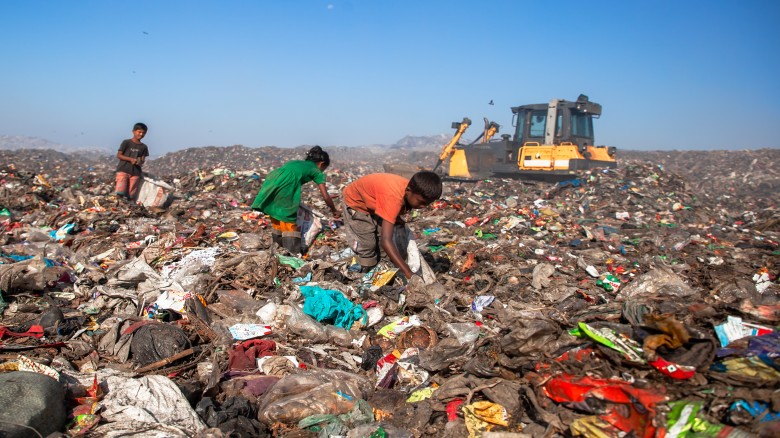 Photo: Muhammad Amdad Hossain