Dhaka

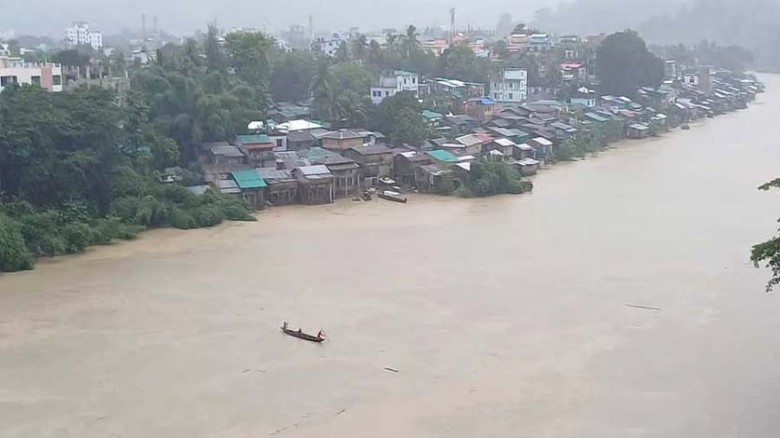 Photo: .

Online Desk
Despite advance warnings of heavy rainfall, flash floods, and landslides in Bangladesh's southeastern and northern regions, experts say inadequate on-the-ground preparedness has worsened damage and public suffering.
The Bangladesh Meteorological Department, the Flood Forecasting and Warning Centre (FFWC) under the Bangladesh
Water Development Board, and other relevant agencies had been warning since July 1 about the risks of excessive
rainfall, flooding, and landslides. However, concerns have been raised over
insufficient pre-positioning of relief supplies, delayed evacuation of
vulnerable communities, inadequate rescue equipment, limited deployment of
medical teams, and weak coordination among local authorities.
According to the Ministry of Disaster Management and Relief,
flooding has affected 59 upazilas, 334
unions, and 12 municipalities across seven districts—Chattogram, Cox’s Bazar, Khagrachhari,
Rangamati, Bandarban, Moulvibazar, and Habiganj. A total of 155,311 families have been stranded by
floodwaters, while the number of affected people has risen to 609,411. So far, 54 people have died and 39 others have been injured due to
floods, landslides, and related incidents.
Experts believe the scale of the
disaster cannot be attributed solely to natural causes. They argue that
inadequate preparedness, poor coordination, unplanned urban development, weak
drainage systems, and delays in rescue operations have significantly increased
the impact.
Climate and water resources expert Professor Ainun Nishat said weather
and flood forecasts should be communicated in language that is easier for the
public to understand so that people can take timely precautionary measures.
Residents of the affected districts
reported that although some shelters were opened, effective efforts to evacuate
people were often lacking. In some areas, shelters were not adequately
prepared, while in others, medical teams and relief supplies arrived late. Many
communities also faced shortages of food, safe drinking water, baby food, and
essential medicines.
Government data show that the flood
situation began on July 5, but
the first phase of relief allocation for the seven worst-affected districts was
not announced until July 12. The
initial allocation included Tk 17.5
million in cash assistance and 3,250
tonnes of rice. Later, an additional Tk 28.5 million and 5,700
tonnes of rice were allocated for 57 more districts.
Disaster management experts believe
the current relief allocation may not be sufficient if the crisis continues for
an extended period. They also stressed the need for greater support from the Bangladesh Army, Border Guard Bangladesh (BGB), as well
as the Navy and Air Force, particularly in remote and
hard-to-reach areas.
Director General of the Department of Disaster Management, Rezwanur Rahman, said rescue and
relief efforts are being carried out jointly by the Army, Navy, district
administrations, and volunteers. Meanwhile, Disaster Management Secretary Md. Saidur Rahman Khan said many
residents had been urged to move to shelters in advance, but not everyone
agreed to evacuate.
The Flood Forecasting and Warning Centre has also warned of fresh short-term flooding in low-lying riverside areas across nine northern and northeastern districts within the next 24 to 48 hours. At the same time, the Bangladesh Meteorological Department has forecast heavy to very heavy rainfall in the divisions of Dhaka, Chattogram, Sylhet, Mymensingh, Rajshahi, and Rangpur.