Dhaka

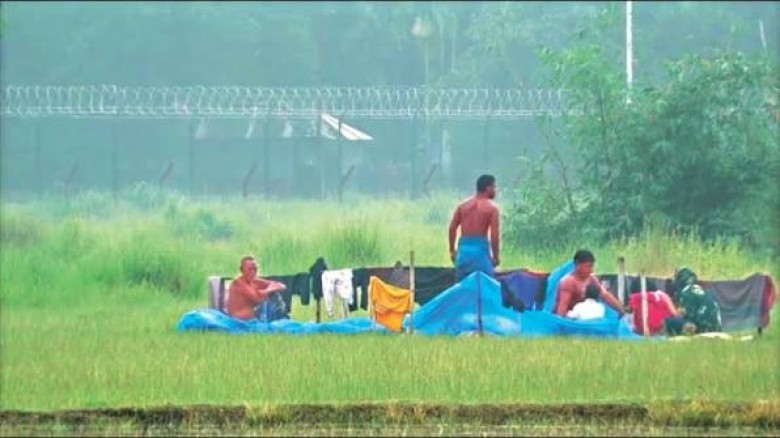 Photo: .

Online Desk
Bangladesh has expressed concern
over India's alleged practice of forcibly sending people identified as
Bangladeshi nationals across the border, commonly referred to as
"push-ins." Dhaka maintains that any repatriation process should be
carried out in accordance with international law, human rights principles, and
existing bilateral mechanisms. However, officials say the expected response
from New Delhi has yet to materialize.
The issue is expected to be one of
the key topics of discussion at a meeting between the directors general of
Border Guard Bangladesh (BGB) and Border Security Force (BSF) on Monday.
Bangladesh has already formally urged India to address the matter through
established repatriation procedures.
Diplomatic sources note that
Bangladeshi nationals have long been returned from countries in North America,
Europe, and the Middle East through internationally recognized legal processes.
In contrast, recent attempts to identify and push Bengali-speaking individuals
across the India-Bangladesh border as Bangladeshi citizens have raised concerns
regarding human rights and international norms.
A senior official at the Foreign
Ministry said Bangladesh had proposed bilateral consular discussions on the
matter long ago, but India has yet to respond. According to the official, if a
country's citizens are found to be residing illegally abroad, they should be
repatriated through internationally accepted procedures—a principle Bangladesh
fully supports.
Citizenship
Verification Remains a Challenge
Government sources said India has so
far provided Bangladesh with a list of approximately 2,800 individuals.
However, many names reportedly appear multiple times, while information related
to hundreds of individuals remains incomplete, slowing down the verification process.
Bangladeshi officials argue that
citizenship cannot be confirmed solely on the basis of a person's name. Proper
verification requires addresses, family records, and other supporting
information, much of which has not been supplied.
Dhaka has also raised concerns over
the alleged denial of consular access to individuals detained in various Indian
states. Officials emphasize that consular access is recognized under
international law and protected by the Vienna Convention on Consular Relations.
Formal
Protest Lodged with India
Last week, Bangladesh submitted a
formal protest note to the High Commission of India in Bangladesh. The note
stated that forcing people across the border without due legal process and
human rights protections could undermine mutual trust and border stability
between the two neighboring countries.
The protest further stressed that
all repatriation procedures should follow internationally accepted standards,
bilateral agreements, and human rights principles. Bangladesh also called for
an immediate halt to such practices.
Human
Rights Concerns Intensify
Recent allegations involving the
forced removal of various groups, including members of the Rohingya community,
have also drawn international criticism. Human rights bodies affiliated with
the United Nations and other global advocacy groups have described such actions
as a matter of concern.
According to observers, sensitive
border-related issues require careful adherence to international law and
humanitarian values. Failure to do so could negatively affect bilateral
relations as well as regional stability.