Dhaka

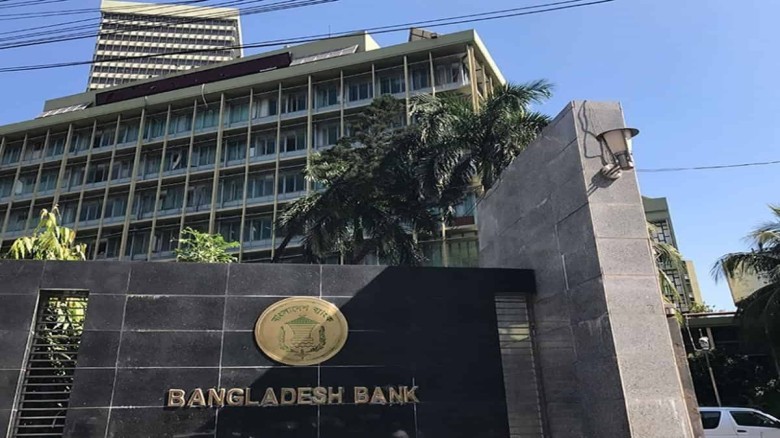 Photo: .

Rakib Hasan Alif
Four years ago, Bangladesh Bank allowed
eleven large business groups to reschedule loans that had already been
restructured once, on the condition that they continued making payment on time.
This year several of those same groups returned to reschedule the very same
loans again. Their legal status remained unchanged throughout. Under central
bank rules, they were never classified as defaulters. This is not a loophole
buried in the fine print. It is written into the Master Circular on Loan
Classification and Provisioning which Bangladesh Bank has issued and revised
since 2012. the circular states that a rescheduled loan cannot be treated as
defaulted loan. It also says the borrower cannot be treated as defaulter while
rescheduling remains available under the rules. A loan can be rescheduled once.
It can be rescheduled again. The label "defaulter" never has to
apply.
The mechanics look strict on paper. A first
rescheduling requires a down payment of five to fifteen percent of the overdue
installments on twenty percent of the total outstanding balance, whichever is
lower. A third rescheduling raises the requirement to fifty percent of the
overdue installments or thirty percent of the total outstanding balance. In
theory, each round becomes more expensive, making repeated rescheduling less
attractive.
In practice, large borrowers do not follow
that path. Bangladesh Bank created a separate restructuring framework for large
business groups through BRPD Circular No. 04, issued on 29 January 2015. It
allows a company or business group to apply for restructuring regardless of how
its loan is classified. The application must include a business plan and a
viability analysis. The bank's board can then approve the proposal directly.
Since late 2025, the framework has become even more flexible.
A BRPD circular issued on 24 November 2025
made the terms even more generous. It allowed any loan classified as bad by 30
November 2025 to be rescheduled for up to ten years with two year grace
period. Borrowers had to pay an upfront
amount equal to just two percent of the outstanding balance. Another BRPD
circular, issued on 22 February 2026, cut even that requirement in half. The
remaining amount could be paid within six months. The concessions were so
generous that the High Court later questioned the legality of circular that
granted defaulters up to ten years to repay.
The scale of the problem is now reflected in
the government's own figure. Speaking in Parliament in April
2026, Finance minister Amir Khasru Mahmud
Chowdhury said defaulted loans had reached Tk 5,44,831.88 crore as of 31
December 2025. He identified the country's twenty largest defaulters. Ten of
them belonged to the S Alam Group alone, including S Alam Super Edible Oil, S
Alam Vegetable Oil and S Alam Refined Sugar Industries. The remaining names
were dominated by Beximco Group, Deshbandhu Group, Keya Cosmetics and Pacific
Bangladesh Telecom, a company linked to former foreign minister M Morshed Khan.
Defaulted loans did not remain stable while
these policies were in place. They rose from Tk 3.45 lakh crore in December
2024 to Tk6.44 lakh crore by September 2025, after banks were required to
disclose bad loans that had remained hidden under the previous government. By
December 2025, the figure had fallen to about Tk 5.44 lakh crore. According to
the Business Standard, Bankers said the decline reflected policy driven loan
rescheduling rather than actual repayment.
Bangladesh Bank formed a five-member committee
in January 2025 to review rescheduling requests for loans of Tk 50 crore or
more. Around 1250 companies applied, including some of the country's largest
business groups. By August the committee had approved 250 applications and
granted repayment periods of five to fifteen years. Under the rules
applications were supposed to pass through the banks before reaching the
committee. According to the Business Standard, many companies applied directly
instead. The committee then informed the banks which borrowers qualified. In
practice, the approval process worked in reverse.
The cost of this system extends far beyond a
bank's balance sheet. When a large share of a bank's lending capacity remains
tied up with a small group of repeat reschedulers, less credit is available for
other borrowers on normal terms. Banks also face greater risk, which pushes up
the overall cost of lending. At the same time, they must set aside larger
provisions against potential losses. That money could otherwise support new
loans for businesses and households. The burden does not end with the banks.
When a state owned bank runs short because of this, the government has often
used public funds to keep it solvent. That shifts part of the cost to text
payers, even though the original defaulting companies may never bear the full
loss. Depositors also carry part of the risk. After all, the money being lent
belongs to them. The system also raises a question of fairness. Two borrowers
can miss the same number of loan payments. One is classified as defaulter,
loses access to new credit and carries that label in the banking system the
other may avoid that outcome if the loan is large enough to qualify for
rescheduling or restructuring. The system is not always based on the ability to
repay. It often depends on the size of the loan and access to special relief
mechanisms. Bangladesh accepted a $4.7 billion IMF loan in 2023 with a
commitment to strengthen loan classification rules. One key reform was to
classify loans as non performing after three months of missed payments instead
of six or nine. Bangladesh Bank has postponed that reform more than once,
arguing that the banking sector remains too fragile because of record levels of
bad debt. As a result, the stricter standard has yet to take full effect. No
law has been broken in this process. Every rescheduling described here was
permitted under Bangladesh Bank's own circulars. The loophole is not an
accident in the system. It is the system, one relief measure at a time. It is
renewed whenever bad debt becomes too large to confront directly.
The writer is a student at the University of Chittagong