Dhaka

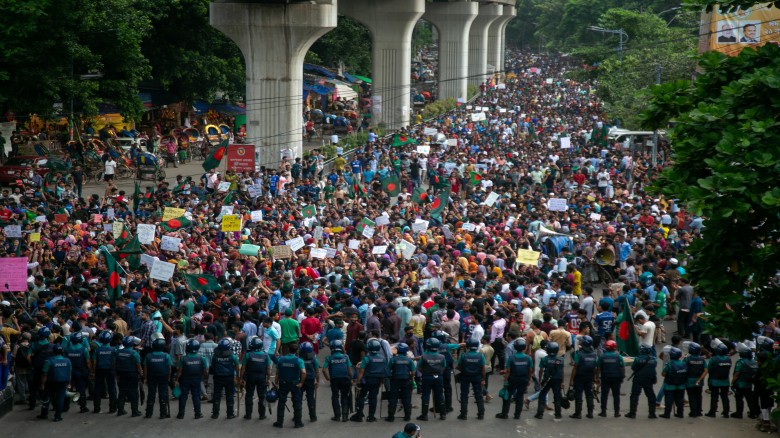 Photo: .

Online Desk
August 2,
2024 marked one of the most significant
days of Bangladesh's July mass uprising,
as allegations of gunfire against demonstrators emerged during nationwide
protest marches organized by the Anti-Discrimination
Student Movement. The day also saw the ruling Awami League come under unprecedented pressure on the streets amid
growing public resistance.
The protests came after the "March for Justice"
programme on July 31, which had
injected new momentum into the movement following reported attacks on
demonstrators. Student leaders declared August
1 as "July 32,"
vowing that "July" would continue until the fall of the Sheikh Hasina
government. In that spirit, August 2
was observed as "July 33,"
with mass marches held across the country.
Following Friday prayers, thousands
of people took to the streets in Dhaka and other cities despite heavy rain and
attempts by law enforcement agencies to restrict the demonstrations. While
rallies at Shahbagh and Science Laboratory in the capital
remained largely peaceful, clashes and reports of gunfire occurred in Uttara. In Chattogram, protesters held a mass march stretching nearly 10 kilometres. Clashes were also
reported in Khulna, Habiganj, Cumilla, Lakshmipur,
and Sylhet.
A day earlier, six coordinators of
the Anti-Discrimination Student Movement—Nahid Islam, Sarjis Alam,
Hasnat Abdullah, Asif Mahmud, Abu Bakar Majumdar, and Nusrat
Tabassum—were released from the custody of the Detective Branch (DB) of police. In a joint statement, they said a
video message announcing the withdrawal of the movement had been recorded under
pressure while they were in custody. They vowed to continue the protests until
their nine-point demands were
met and announced a mass rally at the Central
Shaheed Minar on August 3.
In Khulna, police fired tear gas shells and sound grenades at
demonstrators near the city's Zero
Point, triggering violent clashes. Similar confrontations took place in
the Akhalia and Madina Market areas of Sylhet. In Habiganj, members of the Bangladesh
Chhatra League were accused of attacking protesters. In response, angry
demonstrators later vandalized the local Awami League office.
The movement also received support
from artists, academics, cultural activists, and members of civil society.
Members of the Visual Artists'
Community staged a protest on Sat
Masjid Road in Dhanmondi, while cultural figures, teachers, and
intellectuals organized a "Droh
Jatra" (March of Resistance) from the National Press Club to the Central
Shaheed Minar in solidarity with the student movement.