Dhaka

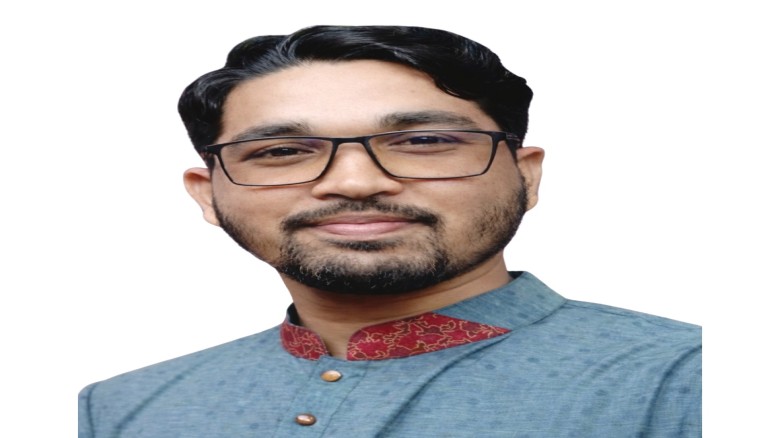 Photo: .

Md. Monirul Islam
After days and years, Eid-ul-Azha has come again. This one of the largest
religious festivals in the Muslim world is not only a gathering of joy, but it
is a unique gathering of sacrifice, unity and humanity. When Muslims all over
the world sacrifice in the name of Allah on the 10th of the month of
Zil-Hijjah, not only animals are slaughtered. What is slaughtered is our inner
pride, greed and narrow-mindedness. This festival reminds us again and again
that as humans, our responsibility as humans is not only to ourselves, but also
to society and humanity.
The lesson of sacrifice that history teaches, the roots of Eid-ul-Azha
are inscribed in the history of the infinite sacrifice of Hazrat Ibrahim (AS).
At the command of Allah, he was ready to sacrifice his beloved son Hazrat
Ismail (AS). This event is not just a historical narrative, it is an eternal
message. Therefore, being able to give up the most beloved thing for the
pleasure of Allah Almighty is the sign of true faith.
Hazrat Ismail (AS) also passed
this test equally. He did not object to his father's decision but rather
surrendered himself to the will of Allah. This incident of double sacrifice
teaches us that faith does not mean just saying it with his mouth, but if
necessary, remaining steadfast in the path of Allah even if he loses
everything. The relevance of this teaching is even deeper today. When we get
caught up in the pursuit of wealth, get caught up in the illusion of
self-interest, and lose humanity in the midst of competition, then the story of
Ibrahim (AS)'s sacrifice reminds us that the true greatness of a person is not
in power, not in wealth, but in sacrifice.
In the colors of festivals, Bangladesh Eid-ul-Azha has its own form in Bangladesh,
it has a different life. A few days before Eid, people flock to the cow market.
A festive atmosphere is created everywhere in cities and villages. Children go
to the market to see the cows, name them, and caress them. These memories of
going to the market holding their father's hand and bringing their favorite cow
home are part of the childhood of millions of people in Bangladesh. Especially
those who grew up in villages. The night
before Eid, cooking arrangements are made in every house. The smell of semai,
payes, and special meats fills the entire neighborhood. On the morning of Eid,
after the Fajr prayers, after taking a bath and putting on new clothes, going
to the Eidgah, praying shoulder to shoulder in the open field, this scene is a
reflection of the ever-familiar thousands of years of Eid in Bangladesh. When
the sacrifice begins in every neighborhood after the prayers, the sky and air
of Bengal are filled with a different atmosphere. Sending meat to neighbors'
houses, distributing it among the poor and needy. These customs have been part
of the culture of this country for centuries. It is not only a religious duty,
but also a deep social bond.
Another big lesson that Eid carries about unity is equality and unity.
The rule of dividing the sacrificial meat into three parts: one part for
oneself, one part for relatives, and one part for the poor and needy. Hidden in
this division is the dream of building a balanced society. This Islamic philosophy of bridging the gap
between the rich and the poor is equally relevant today, but even more
important in today's discriminatory society. On the day of Eid, people forget
the differences between the young and the old. Farmers and bureaucrats, workers
and owners, rich and poor pray in the same row. This moment proves that Islam
does not separate people, but brings them together. When people from different
walks of life come together for the same festival, a unique social solidarity
is created. The connection of Eid-ul-Azha with Hajj is also a remarkable manifestation
of unity. Millions of Muslims from all over the world gather in Mecca at the
same time. Different languages, different races, different countries, but the
same faith. This scene is one of the largest human gatherings in the world. A
fusion of cultures and beliefs. Eid-ul-Azha is also an integral part of the
cultural identity of Bangladesh. This festival is not limited to the mosque or
the sacrificial field. New clothes, special cuisine, meeting with relatives,
the joy of returning to the village. All in all, Eid-ul-Azha becomes a complete
celebration of life. The busy city dweller rushes to his village home for the
Eid holiday. One meets old parents,
chats with childhood friends, old memories are rekindled. This return is also a
sacrifice. Leaving the comfort of the city and returning home to the pull of
one's roots.
For generations, this festival has taught people that there will be joy
in life, but that joy must be earned through sacrifice. Real happiness is not
in consumption, but in sharing. This philosophy has deeply embedded in the
character of the people of Bangladesh. The relevance of Eid-ul-Azha in the
modern context The way Eid is celebrated has changed over time. In the city,
sacrifices are now made in flats, cows can be bought online, and the practice
of sharing sacrifices has increased. But despite these changes, the main
message of Eid-ul-Azha remains intact. The form changes, but the spirit does
not change. However, at this time, we need to think a little. Are we truly
accepting the teachings of sacrifice? Hasn't the culture of distributing meat
become just a formality? Is the poor person really getting his fair share?
These questions awaken our conscience and make us responsible.
In conclusion, Eid-ul-Azha is not
just a festival, but a mirror where we see ourselves. Our faith, our culture,
our humanity. All come together on this one day. If we can truly embody this
lesson of finding joy through sacrifice in our lives, then not only Eid, but
every day will become a gathering.
The sacrificial animal not only provides meat, but also teaches a lesson
that people grow only when they give themselves. May our journey be on the path
of growth, this is the hope of this Eid. I wish everyone 'Eid Mubarak'.
Author: Law student and young researcher