Dhaka

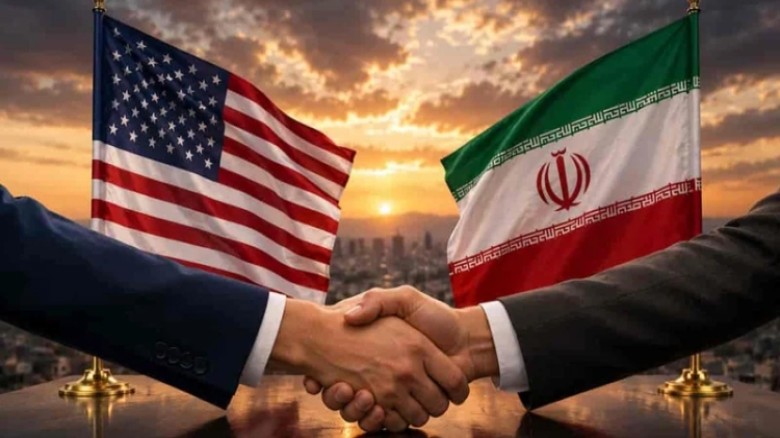 Photo: .

Online Desk
After years of hostility and
confrontation, the United States and Iran have reportedly agreed to move toward
peace through a new understanding brokered by Pakistan. Although neither
Washington nor Tehran has officially confirmed the full details of the agreement,
Iranian state media have published 14 key points outlining the proposed deal.
Following Pakistani Prime Minister
Shehbaz Sharif's announcement that the two sides had reached an understanding,
US President Donald Trump also acknowledged the agreement on social media.
Subsequently, Iran's semi-official Mehr News Agency disclosed the reported
terms of the potential accord.
According to the published details,
efforts will be made to establish permanent ceasefires in conflict zones,
including Lebanon. The United States is also expected to pledge
non-interference in Iran's internal affairs. In addition, discussions have
reportedly included lifting the US naval blockade around Iranian ports within
30 days.
The agreement also mentions the
withdrawal of US forces from areas linked to the conflict. At the same time,
steps would be taken to reopen the Strait of Hormuz, one of the world's most
critical maritime routes, which has been severely affected by regional
tensions. Under Iranian supervision, the strategic waterway is expected to be
reopened to international shipping within 30 days.
Furthermore, the United States and
its allies are reportedly considering a reconstruction assistance package worth
at least $300 billion for Iran. The proposed deal also includes the removal of
sanctions on Iran's oil and energy sectors, along with the partial release of
Iranian funds that had previously been frozen.
As part of the understanding, Iran
would reaffirm its commitment not to pursue nuclear weapons. In return, the United
States would refrain from imposing new sanctions and avoid further military
build-up in the region.
Mehr News claimed that progress on
key issues—such as the partial release of Iranian assets, the lifting of oil
sanctions and the removal of the naval blockade—would be essential before any
final agreement could move forward. If a comprehensive deal is ultimately
reached, it may be implemented following approval by the United Nations
Security Council.
Announcing the agreement, President
Trump said the Strait of Hormuz would once again be opened to international
shipping without tolls and that he had ordered the immediate withdrawal of the
US naval blockade. According to him, the understanding could create a new
opportunity for peace and stability across the region.
However, the initiative has not been
welcomed by hardline circles in Israel. Several right-wing Israeli media
outlets have already criticised Trump, arguing that while the agreement may
represent a diplomatic success for Iran, it could create strategic discomfort
for Israel.
Overall, after decades of rivalry and mistrust, the proposed US-Iran understanding has raised an important question: Could this agreement mark the beginning of a new chapter in Middle Eastern geopolitics?