Dr. Muhammad Mahtab Hossain Mazed
Human rights are inherent—they belong to every individual from birth. They are not granted by any government, nor promised by any political party. Every human being deserves dignity, freedom, and security simply by virtue of being human. Human rights represent the universal framework of fundamental entitlements that apply to all, regardless of race, religion, ethnicity, language, gender, or social status. These rights are unalienable and indivisible. International Human Rights Day, observed every year on December 10, serves as a global reminder of this universal truth. In 2025, the day will be celebrated for the 77th time, marking a remarkable milestone in humanity’s ongoing struggle to protect and uphold human dignity.
Human rights encompass a wide range of essential freedoms and protections. They include the right to life and personal security, access to education, healthcare, and social services, freedom of thought, conscience, and expression, justice under the law, equality, and freedom from discrimination. Fundamental rights also include access to adequate food, clean water, and shelter—without which a person’s freedom or dignity cannot be fully realized. A society or nation can be considered truly civilized only when human rights are universally respected and protected.
The Long History of Human Rights Struggle
The achievement of human rights has never been instantaneous. It is the outcome of centuries of struggle, sacrifice, and relentless pursuit of justice. History shows us how slavery crushed human dignity, colonialism exploited nations, racial and ethnic discrimination subjected people to unimaginable suffering, and religious, linguistic, and social prejudices denied people their fundamental rights. Women, in particular, were historically denied education, political participation, and equal protection under the law, enduring violence and oppression that denied them their rightful place in society.
Over the centuries, humanity has repeatedly risen to challenge injustice. The ideals of the French Revolution inspired people to fight for liberty and equality. Movements to abolish slavery, anti-colonial struggles, and civil rights movements across the globe all became turning points in the fight for human dignity. However, the most significant milestone in the history of human rights was reached on 10 December 1948, when the United Nations adopted the Universal Declaration of Human Rights (UDHR). For the first time in history, the world was formally informed: “All human beings are born free and equal in dignity and rights.” This document was not merely a legal instrument; it became the moral constitution of humanity, setting global standards for justice, equality, freedom, and compassion.
Human Rights in 2025: Are They Truly Secure?
Seventy-seven years have passed since the adoption of the UDHR, yet human rights remain under constant threat. Across the globe, millions of people continue to suffer from war, hunger, poverty, discrimination, and political repression. Children and women caught in conflict zones of the Middle East face extreme insecurity and violence. Famine and food scarcity affect millions across parts of Africa, while refugee crises in Asia and other regions expose displaced populations to inhumane living conditions. Even in peacetime, freedom of speech is curtailed in some countries, digital surveillance infringes on privacy, and climate change displaces entire communities, creating new vulnerabilities.
The enemies of human rights today are multifaceted. They include authoritarian state practices, armed conflict, economic inequality, misuse of technology, and deeply ingrained social discrimination. Protecting human rights is no longer just a legal obligation; it is a daily, global challenge that demands vigilance from governments, organizations, and individuals alike.
Human Rights: Recognition of Human Dignity
At its core, human rights are about acknowledging the inherent dignity of every person. They make it clear that:
Changing one’s religion does not diminish rights.
Skin color, language, or cultural background does not reduce human worth.
Being a woman does not limit entitlement to freedom or protection.
Poverty does not mean a reduction in rights.
Disability does not lessen one’s inherent dignity or entitlement to opportunity.
Human rights are inalienable and indivisible. No government or individual can bestow them, nor can anyone lawfully take them away. People are born with these rights, and their protection is a shared moral and social responsibility.
Global Theme for 2025: “Human Rights — Our Everyday Essentials”
The theme for 2025 emphasizes a fundamental reality: human rights are not abstract concepts—they are a part of everyday life. The theme reminds us that basic freedoms and protections are essential for living with dignity.
1. Human Rights Are Everyday Necessities
The ability to sleep safely at night, receive medical care when ill, send children to school, and avoid hunger are all basic human rights that must be guaranteed daily.
2. Freedom Means Living Without Fear
Where people can speak, question, or choose freely without fear, human rights are truly realized. Freedom is not abstract—it is the practical ability to participate in society without intimidation or coercion.
3. A Society Free from Discrimination
A society that upholds human rights ensures equality, where gender, religion, ethnicity, socioeconomic status, or cultural identity cannot become a barrier to opportunity or participation.
Global Progress and Remaining Challenges
Over the past decades, the world has made significant progress in advancing human rights. Women’s suffrage has expanded, child labor has been reduced, education and literacy have increased, slavery has been abolished, the rights of persons with disabilities have been recognized, labor rights have improved, freedom of expression has grown, and healthcare access has expanded globally. These achievements demonstrate that collective efforts can make human rights a reality.
Yet, challenges remain. Political oppression, social inequality, hate speech, religious intolerance, violence against women and children, environmental degradation, poverty, and misuse of digital technologies continue to undermine human rights daily. These ongoing obstacles illustrate that securing human rights requires persistent attention, awareness, and action.
Human Rights in Bangladesh: Achievements and Challenges
Bangladesh, as a developing nation, has made notable strides in the protection and promotion of human rights. Progress includes improvements in primary education, women’s literacy, healthcare access, poverty reduction, social safety programs, and targeted policies to support marginalized populations.
Despite these achievements, challenges persist. Child labor and early marriage remain concerns, violence against women continues, labor rights are sometimes violated, environmental hazards pose risks, digital misuse threatens privacy and information security, and persons with disabilities often face limited opportunities. Addressing these challenges requires a collaborative approach, involving the government, civil society, and individual citizens.
Shared Responsibilities: State and Citizens
Responsibilities of the State:
Enact fair and just laws.
Ensure independent and impartial judiciary.
Protect freedom of expression.
Guarantee education and healthcare rights.
Preserve the environment.
Reduce inequality and promote social justice.
Responsibilities of Citizens:
Respect the rights of others.
Demonstrate compassion and solidarity.
Avoid discrimination and prejudice.
Stand for truth and justice.
Follow laws and civic duties.
Support the marginalized and disadvantaged.
True human rights protection occurs when the state enforces justice and citizens actively practice humanistic values in their daily lives.
Human Rights in Everyday Life
Human rights are realized not through grand speeches or large movements alone, but through everyday actions. Protecting children, valuing women’s opinions, assisting people with disabilities, helping the poor, behaving respectfully online, and resisting injustice—all contribute to building a humane society. Small, daily actions create the foundation for significant societal change.
Conclusion
Seventy-seven years ago, the world proclaimed through the UDHR that human dignity is the foundation of civilization. In 2025, this principle is even more relevant. Human rights are not merely legal obligations—they are the pillars of peace, freedom, development, and humanity itself. A person’s greatness is measured not by wealth or power, but by humanity and ethical conduct. Where human rights prevail, peace, development, and dignity follow naturally.December 10 is therefore more than a date on a calendar—it is a promise between humans, a commitment to build a just and fair world, and a timeless tribute to human dignity.
Writer, Columnist & Human Rights Activist
Founder Chairman, Jatiya rogi Kalyan Society
News Published By:
Bangladesh Diary

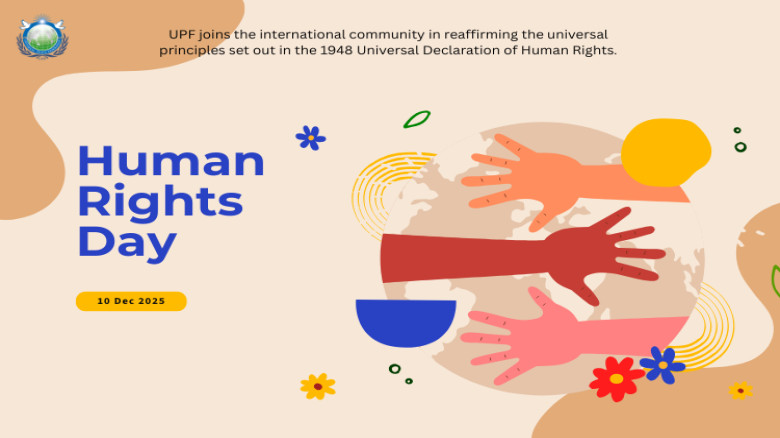 Photo: Human rights are inherent