Dhaka

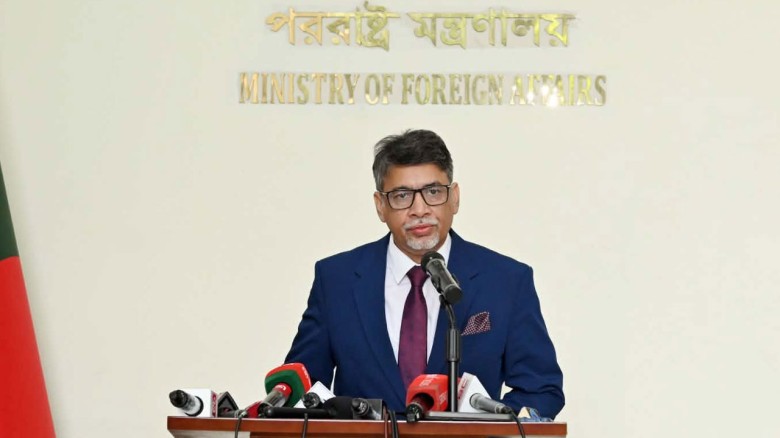 Photo: .

Dhaka is emphasising the need to create a
conducive environment ahead of Prime Minister Tarique Rahman’s possible visit
to New Delhi. Although the date of the visit has yet to be finalised, officials
from the two countries have been in discussions for several weeks.
Diplomatic sources say the timing of the
visit will depend largely on Dhaka’s demands and the next steps taken by New
Delhi.
Bangladesh is currently seeking swift
progress on two issues: expediting the extradition process of former prime
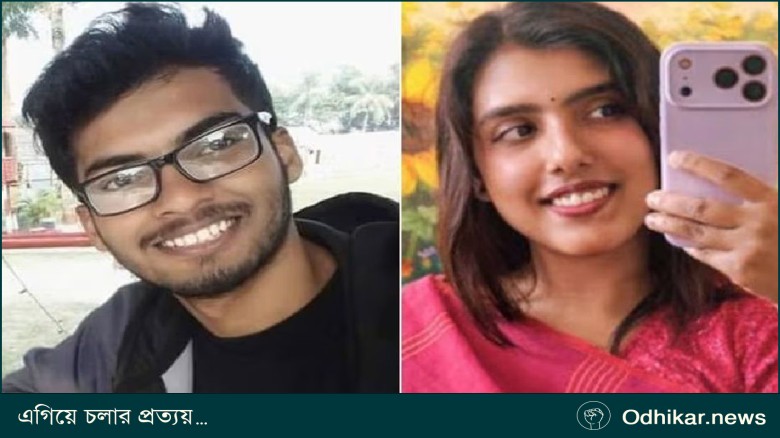
minister Sheikh Hasina and handing over suspects in the murder case of Sharif
Osman Hadi, spokesperson for Inquilab Mancha.
Foreign Ministry spokesperson A.K.M. Shahidul
Karim said on Sunday that officials from Bangladesh and India had been
communicating for several weeks regarding the prime minister’s possible visit
to India.
He said Sheikh Hasina’s public remarks in New
Delhi on August 5 had affected the environment required for the visit.
“The visit requires a conducive environment,”
the spokesperson said, adding that Bangladesh had requested India to expedite
the extradition of Sheikh Hasina and other fugitives under the bilateral
extradition treaty and to hand over the accused in the Hadi murder case.
Dhaka is now waiting for New Delhi’s
response.
Diplomatic analysts say Bangladesh’s position
indicates that Dhaka does not view Tarique Rahman’s visit as merely a formal
diplomatic engagement. Rather, it wants visible progress on several sensitive
bilateral issues before the visit.
Relations between Dhaka and New Delhi changed
significantly following the July-August 2024 mass uprising and the fall of
Sheikh Hasina’s government on August 5.
Tensions increased over Sheikh Hasina’s
presence in India, border issues and various political matters. At one point,
India’s visa services for Bangladeshis were also significantly restricted.
After Tarique Rahman’s government took
office, efforts were made to restore communication and normalise relations
between the two countries. Indian Prime Minister Narendra Modi invited Tarique
Rahman to visit New Delhi.
However, India was not the destination of the
prime minister’s first foreign trip. He visited Malaysia in June and later
travelled to China.
According to diplomatic sources, labour
markets and migration were key issues during the Malaysia visit, while
investment, infrastructure and economic cooperation were central to the China
trip. Therefore, those visits should not be viewed as direct moves against
India, they said.
Later, Tarique Rahman was invited to attend
the outreach session of the BRICS summit scheduled to be held in New Delhi in
September as chair of BIMSTEC. He was also invited for a separate bilateral
visit, creating two possible avenues for his trip to India.
India has yet to announce a direct decision
on Bangladesh’s request for Sheikh Hasina’s extradition.
Indian Foreign Ministry spokesperson Randhir
Jaiswal has said the matter is being examined through established procedures.
While Bangladesh is seeking swift political
and diplomatic progress, India has maintained that the issue should be handled
through the legal process.
The 2013 India-Bangladesh extradition treaty
contains provisions for returning convicted or accused persons. It also
includes certain exceptions for offences considered political in nature.
Dhaka is also actively pursuing the return of
suspects in the Hadi murder case. According to information from Bangladesh’s
Home Ministry, necessary documents have been sent to India seeking the return
of three suspects, including the case’s principal accused, Faisal Karim Masud.
Diplomatic sources say that although the
Sheikh Hasina issue remains important, the entire bilateral agenda is not
confined to it.
Trade, investment, energy, border management,
visas, connectivity, regional security and the sharing of waters of common
rivers are also expected to feature in discussions.
The renewal of the 1996 Ganges Water Sharing
Treaty is particularly significant, as the agreement is scheduled to expire in
December this year.
At the same time, obtaining additional diesel
from India is important for Bangladesh amid the country’s current energy
crisis.
Overall, while both sides are discussing ways
to normalise relations, each is seeking to maintain its own position.
Dhaka wants visible progress on several
issues before the visit, while India appears interested in managing sensitive
matters through dialogue and advancing broader bilateral ties.
Diplomats say Tarique Rahman’s possible visit
to New Delhi is therefore more than a routine foreign trip—it could serve as an
important test of the basis on which the new government’s relations with India
will move forward.