Dhaka

 Photo: .

Online Desk
A series of deaths linked to rabies
has raised alarm in Sundarganj upazila of Gaibandha, where patients reportedly
failed to receive anti-rabies vaccines on time at government hospitals after
being bitten by dogs. In the past eight days alone, five people have died.
Locals allege that due to the shortage of vaccines in public hospitals, victims
were forced to buy vaccines privately, yet many could not be saved.
The latest victim, Sultana Begum of
Dhubni Bazar area, died on Wednesday afternoon. Earlier, on Monday night,
Afruza Begum of Bajra Kanchibari village also died after suffering from rabies
symptoms. She had been bitten by a dog on April 22 and was first taken to
Gaibandha Shodor
Hospital, where no vaccine was available. Later, even Rangpur Medical College
Hospital could not provide the vaccine, forcing the family to purchase it from
outside.
Afruza Begum’s son, Monarul Islam,
said that despite receiving the vaccine, his mother later developed severe
rabies symptoms, including fear of water and air, convulsions, fever, and
behavioral changes. She eventually died 18 days after the attack.
Sixteen
People Bitten on the Same Day
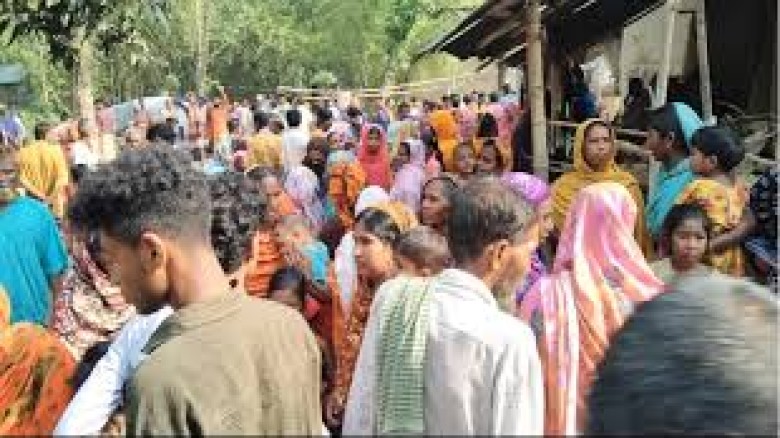
According to locals, on the morning
of April 22, a dog first attacked a woman near Bishnumoyi Government Primary
School and later bit 15 more people. Residents eventually beat the dog to
death.
Among the deceased are Nandarani,
Ful Mia, and Ratneshwar. At least nine more victims are currently undergoing
treatment.
Local union parishad member Tajrul
Islam said many victims were bitten on the face and upper body, increasing the
risk and severity of infection.
No
Vaccine for One and a Half Years
Sundarganj Upazila Health Officer
Dr. Dibakar Basak said the upazila health complex has been without anti-rabies
vaccines for the past one and a half years. Despite repeated requests, no new
supply was provided. As a result, patients have been advised to purchase
vaccines privately.
Gaibandha Civil Surgeon Dr.
Rafiquzzaman also acknowledged that the shortage prevented government hospitals
from providing proper treatment. He said rabies is almost entirely preventable
if vaccines are administered on time.
Shortage
Reported in Other Districts
The crisis is not limited to
Gaibandha. Similar shortages of anti-rabies vaccines have been reported in
Khulna, Rajshahi, Naogaon, Barishal, and Brahmanbaria, among other districts.
In many places, patients are being forced to buy vaccines from private sources.
Health sector insiders say the
shortage resulted from delays in long-term health programs and complications in
procuring new vaccine supplies. The disruption has also affected prevention
programs for diseases such as measles and rabies.
Experts
Express Concern
Former Director of Disease Control
at the Directorate General of Health Services, Professor Dr. Benazir Ahmed,
said Bangladesh had once made significant progress in controlling rabies.
However, he warned that the country’s achievements are now at risk due to
stagnation in prevention activities. According to him, several hundred thousand
people in Bangladesh are bitten by dogs or other animals every year.
Dr. Enamul Haque of the National
Institute of Diseases of the Chest and Hospital said rabies deaths are
generally preventable if patients receive the full vaccine dosage according to
protocol. He stressed the importance of investigating whether the victims
received complete doses and whether the vaccines used were effective.
New
Vaccine Supply Expected
Health Minister Sardar Md. Sakhawat Hossain said approval has been given to procure 900,000 doses of anti-rabies vaccines through UNICEF. The government expects the situation to improve within the next two weeks.