Dhaka

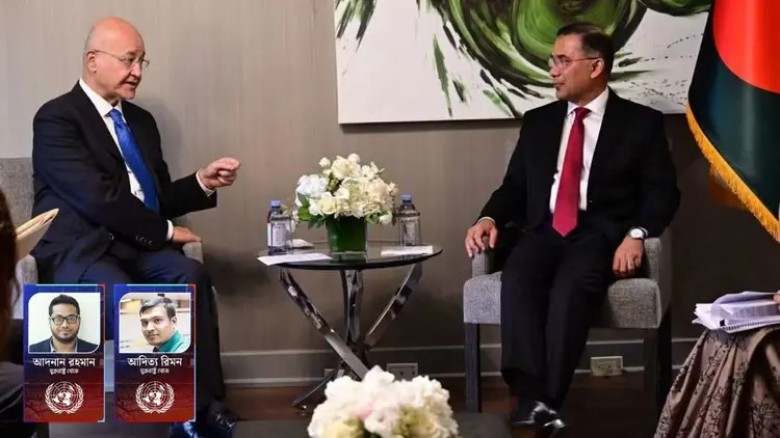 Photo: .

Prime Minister Tarique Rahman has called for stronger and more coordinated international efforts to find a sustainable solution to the Rohingya crisis and ensure the safe, voluntary and dignified repatriation of the displaced people to their homeland in Myanmar.
He said there is no alternative to ensuring the safe and dignified return of Rohingyas to their homeland for a lasting solution to the prolonged crisis.
The prime minister made the remarks during separate meetings with UN High Commissioner for Refugees Barham Salih and Julie Bishop, the UN Secretary-General’s Special Envoy on Myanmar, in New York on Tuesday (September 22). The meetings focused on the prolonged Rohingya crisis and ways to achieve a sustainable solution.
During his meeting with Salih, Tarique said Bangladesh had been hosting a large number of Rohingyas on humanitarian grounds for years. However, he stressed that the crisis could not be permanently addressed by leaving the long-term burden on Bangladesh; rather, a safe and dignified return to their homeland was essential.
He called for continued humanitarian assistance for the Rohingyas as well as stronger international cooperation to expedite the repatriation process. He also stressed the need to create conditions in Myanmar that would allow Rohingyas to return home with security, rights and dignity.
The meeting also highlighted the importance of an effective and coordinated role by the international community. Bangladesh stressed that international efforts should go beyond humanitarian assistance and focus on creating a conducive environment for repatriation.
Salih appreciated Bangladesh’s humanitarian role in hosting the Rohingyas and underscored the importance of continued international cooperation to find a sustainable solution to the crisis.
In his separate meeting with Julie Bishop, Tarique also sought international cooperation to ensure the dignified return of Rohingyas and find a sustainable solution to the prolonged crisis. The discussion focused on the effective role of the international community in resolving the long-standing issue.
The Rohingya crisis took on a long-term dimension after a large influx of Rohingyas from Myanmar into Bangladesh in 2017. Although repatriation initiatives have been taken at different times, the process has not moved forward effectively amid concerns over security and conditions in Myanmar. As a result, the prolonged presence of Rohingyas in camps in Cox’s Bazar continues to create humanitarian, economic and security pressures for Bangladesh.
Meanwhile, Tarique Rahman is scheduled to address the 81st session of the UN General Assembly on September 24. It will be his maiden address to the UNGA as prime minister. The Rohingya crisis is expected to feature prominently among the issues Bangladesh raises during his UN engagements.
On September 23, the prime minister is also scheduled to attend a Bangladesh-hosted high-level side event on the Rohingya crisis in New York, where Bangladesh is expected to seek stronger international cooperation for the earliest possible repatriation of the displaced Rohingyas to Myanmar.