Dhaka

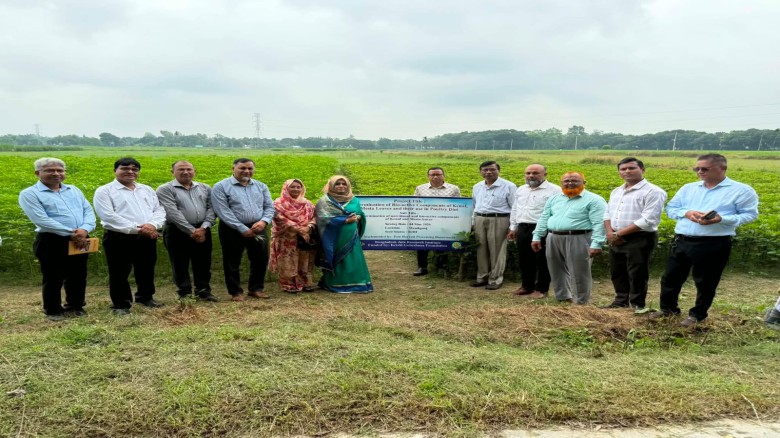 Photo: .

Dr. Farhana Sharmin
Roselle/Mesta
(Hibiscus sabdariffa L.) and Kenaf (Hibiscus cannabinus L.) are
important and versatile plants belonging to the family Malvaceae. Both species
are fast-growing and capable of producing high biomass yields. While kenaf is
primarily cultivated for fiber production and roselle is grown for food,
medicinal, and other multipurpose uses, their leaves can also be considered as a
promising green feed resource.
Although
considerable number of research works have been conducted in Bangladesh on
fiber production from mesta (roselle) and kenaf, comparatively limited research
has focused on the use of their leaves as functional feed ingredients in
poultry diets. The leaves of roselle and kenaf contain crude protein, minerals,
vitamins, dietary fiber, and a range of biologically active phytochemicals.
Therefore, their potential utilization in poultry diets is scientifically
important from the perspectives of nutrition, animal health, productivity, and
sustainable production.
Potential
of Roselle and Kenaf Leaves in Poultry Feed
Roselle
and kenaf leaves contain phenolic compounds, flavonoids, and other antioxidant
phytochemicals that have attracted increasing interest in poultry nutrition.
These bioactive compounds may contribute to the regulation of oxidative stress
through free-radical scavenging activity. Excessive oxidative stress in poultry
is associated with impaired immune function, reduced production efficiency, and
deterioration of meat and egg quality. Therefore, the inclusion of
plant-derived antioxidants in poultry diets may represent a promising natural
nutritional strategy. However, the potential use of roselle and kenaf leaves in
poultry feed should not be evaluated solely on the basis of their nutritional
value. Dietary fiber, secondary metabolites, and anti-nutritional factors must
also be considered. Excessive dietary fiber may reduce nutrient digestibility
and absorption and consequently impair feed utilization efficiency. Therefore,
determining the appropriate harvesting stage, processing method, and dietary
inclusion level is essential.
Important
Bioactive and Anti-Nutritional Compounds Present in the Leaves
1.
Tannins
Tannins
can form complexes with proteins, which may reduce protein digestibility and
amino acid availability. However, low concentrations of tannins are not
necessarily harmful and may provide antioxidant and other biological activities
at appropriate levels. Therefore, determining the tannin concentration in the
leaves and the safe dietary inclusion level is important.
2.
Phytate or Phytic Acid
Phytate
can form complexes with several minerals, particularly phosphorus, calcium,
iron, and zinc, thereby reducing their bioavailability. Where necessary, the
adverse effects of phytate may be reduced through phytase supplementation or
appropriate processing techniques.
3.
Oxalate
Oxalate
can form insoluble complexes with calcium and may consequently reduce calcium
utilization. However, the actual dietary risk depends on the concentration of
oxalate in the leaves and the level at which the leaves are included in poultry
diets.
4.
Saponins
Saponins
possess several biological activities. At appropriate concentrations, they may
contribute to cholesterol metabolism, antioxidant activity, and antimicrobial
effects. However, excessive amounts of saponins may negatively affect feed
palatability, digestion, and nutrient utilization.
5.
Phenolic Compounds and Flavonoids
Phenolic
compounds and flavonoids are important bioactive secondary metabolites. They
may exhibit antioxidant activity and potentially influence oxidative status,
immune response, and meat quality in poultry.
Therefore,
roselle and kenaf leaves should not be considered merely as conventional green
feed materials; these could be explored as potential functional feed
ingredients.
Research
Activities in Bangladesh
Bangladesh
Jute Research Institute (BJRI), through its Post‑Harvest Processing Department
under the Fiber Quality Improvement Division, in collaboration with Bangladesh
Livestock Research Institute (BLRI) to investigate the bioactive compounds of
roselle and kenaf leaves. This project is supported by the Krishi Gobeshona
Foundation (KGF), this pioneering research seeks to harness the nutritional and
functional benefits of these fiber crops for poultry feed technology innovation,
promoting healthier livestock and advancing sustainable agriculture in
Bangladesh.
The research includes cultivation
of roselle and kenaf, leaf production, harvesting at a specific growth stage,
drying, preservation, and evaluation of their suitability for poultry feed.
Nutritional composition and phytochemical profiles of the leaves are being
analyzed at different stages of the research. Experimental cultivation of
roselle and kenaf is being conducted at: Jute Agriculture
Experimental Station, Manikgonj;
Jute Research Regional Station, Rangpur; and regional station of Bangladesh
Livestock Research Institute, Saidpur.
Leaves
are being harvested at approximately 60 days of age, followed by appropriate
drying and storage. Subsequently, the leaves are incorporated into poultry
diets at predetermined levels to evaluate their nutritional value, feed
utilization efficiency, and potential functional effects.
Nutritional
and Bioactive Profile of the Leaves
To determine the true potential of
roselle and kenaf leaves as feed ingredients, the following characteristics are
important to analyze: Crude protein; Crude fiber; Ether extract; Ash; Metabolizable
energy; Amino acid profile; Mineral composition; Phenolic compounds; Flavonoids;
Antioxidant activity; Tannins; Phytate; Oxalate; and Saponins. Such analyses
can provide a scientific basis for determining the nutritional value, safety,
and suitability of roselle and kenaf leaves as functional feed ingredients.
Evaluation
of Effectiveness in Poultry Trials
The
potential benefits of roselle and kenaf leaves should not be evaluated only in
terms of growth performance. Their effects at different dietary inclusion
levels should be assessed through a range of parameters:
Feed
intake → Body weight gain → Feed conversion ratio → Nutrient digestibility →
Antioxidant status → Meat quality
In particular, in broiler chickens,
we analysis of the following parameters, this can provide valuable information
about the potential functional effects of bioactive compounds present in the
leaves: Proximate composition of meat; Amino acid profile; Fatty acid
composition; Cholesterol content; Lipid oxidation, particularly TBARS; and Meat
quality and storage stability.
These
parameters can help establish whether the bioactive compounds present in
roselle and kenaf leaves contribute to improvements in the nutritional and
functional quality of poultry meat.
Potential
for Sustainable Poultry Production
Bangladesh's
rapidly expanding poultry industry plays an important role in meeting the
country's demand for animal protein. However, feed represents one of the major
components of poultry production costs (about 65 to 70%). Dependence on conventional
feed ingredients such as maize and soybean meal, together with fluctuations in
their price and availability, can significantly influence poultry production
costs.
Therefore,
identifying locally available, nutritious, safe, and relatively low-cost
plant-based feed resources is highly important. Roselle and kenaf leaves can be
produced locally, their value-added utilization in poultry feed may contribute
to:
Connection
with the Circular Bioeconomy
The dietary utilization of roselle and kenaf leaves is also closely aligned with the concept of a circular bioeconomy. Instead of considering leaves as low-value or waste biomass generated during fiber production, they can potentially be converted into value-added functional feed ingredients through appropriate harvesting, processing, and dietary inclusion strategies. In this way, additional economic value can be generated from the same agricultural resource while simultaneously reducing biomass waste and improving resource-use efficiency. Thus, roselle and kenaf leaves may contribute to a more integrated production system in which fiber production and livestock nutrition are interconnected, creating opportunities for agricultural waste reduction, value addition, income generation, and sustainable poultry production.
Concluding
remarks
The
nutritional composition, phytochemical profile, antioxidant potential, feed
utilization efficiency, and effects on poultry performance of roselle and kenaf
leaves are currently being scientifically evaluated. In particular, determining
the safety, nutritional value, functional efficacy, and anti-nutritional
effects of these leaves at different dietary inclusion levels is essential for
establishing their potential as locally available and sustainable functional
feed resources in Bangladesh. With appropriate harvesting stage, processing
technology, and dietary inclusion level, roselle and kenaf leaves could become
a locally available, nutrient-rich, bioactive, and sustainable alternative feed
resource for poultry nutrition. Their utilization may simultaneously contribute
to reducing poultry production costs, adding value to agricultural biomass,
improving the utilization of local resources, and developing an environmentally
friendly circular production system. Therefore, roselle and kenaf leaves should
be considered not merely as by-products or underutilized biomass of fiber
production, but as promising functional feed ingredients with potential
applications in sustainable poultry nutrition and value-added agricultural
production in Bangladesh.
Dr. Farhana Sharmin
Senior Scientific
Officer
Post-Harvest
Processing Department
Fiber Quality
Improvement Division
Bangladesh Jute
Research Institute (BJRI)