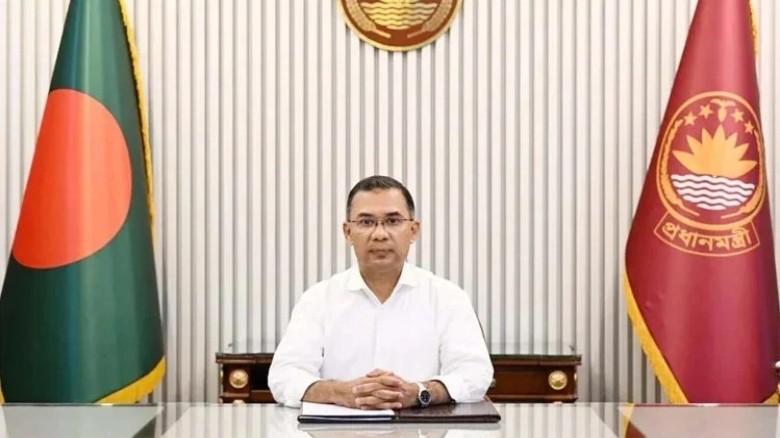
Md. Monirul Islam Chowdhury
Contemporary Bangladeshi politics is far more than a mere contest for power; it is enmeshed in a profound crisis, defined by pervasive distrust, entrenched intolerance, and deep social fragmentation. Although political parties may alternate and governments may rise and fall, the behavioral ethos of the political sphere remains largely impervious to transformation. Against this backdrop, a pressing question emerges: where, indeed, does the root of this malaise lie? Gradually, the answer crystallizes: no measure of political reform alone can address this crisis; what is indispensable is a sustained socio-cultural renaissance.
Politics, after all, is the mirror of society. When reason is subordinated to passion, tolerance eclipsed by animosity, and ethical considerations sacrificed at the altar of opportunism, politics cannot remain insulated from such distortions. Consequently, intolerant rhetoric, vindictive conduct, and ostentatious displays of power become progressively normalized within the public sphere. To rupture this vicious cycle, transformation must originate from within the collective consciousness of society and from the foundational moral and ethical frameworks that underpin it.
A socio-cultural revolution should not be misconstrued as abrupt or violent upheaval; rather, it signifies the deliberate, continuous cultivation of reason, critical thinking, and humanistic values through education, literature, cultural engagement, media, and civic forums. This process gradually guides citizens away from superstition, rumor-mongering, and impulsive emotionality, directing them instead toward deliberative, evidence-based thought. In this manner, individuals learn to prioritize justice, rationality, and the public good above blind partisan allegiance when participating in political decision-making.
The ramifications of such transformation are most clearly observable in civic consciousness. Informed and reflective citizens refuse to accept injustice or corruption as normative; they interrogate abuses of power, breaches of the rule of law, and violations of human rights. Through this process, a culture of accountability emerges, rendering democracy not a ceremonial formality but an efficacious, responsive, and ethically grounded system of governance.
Simultaneously, a socio-cultural revolution nurtures tolerance toward divergent perspectives. While disagreement is an inevitable and healthy feature of democracy, permitting it to metastasize into hostility constitutes a fundamental democratic failure. By inculcating habits of reasoned debate, civil discourse, and empathetic engagement with differing viewpoints, political violence can be mitigated, and the public sphere may evolve into one that is more deliberative, civilized, and dialogic.
In conclusion, restoring Bangladesh’s politics onto a trajectory that is humane, ethical, and genuinely democratic necessitates placing socio-cultural revolution at the center of national endeavor. Political reform attains genuine significance only when harmonized with transformations in the moral and ethical fabric of society. Ultimately, it is only a conscious, tolerant, and principled citizenry that can lay the foundation for a stable, progressive, and resilient Bangladesh.
Md. Monirul Islam Chowdhury
Student, Dhaka College, Dhaka
News Published By:
Bangladesh Diary

 Photo: Collected