Dhaka

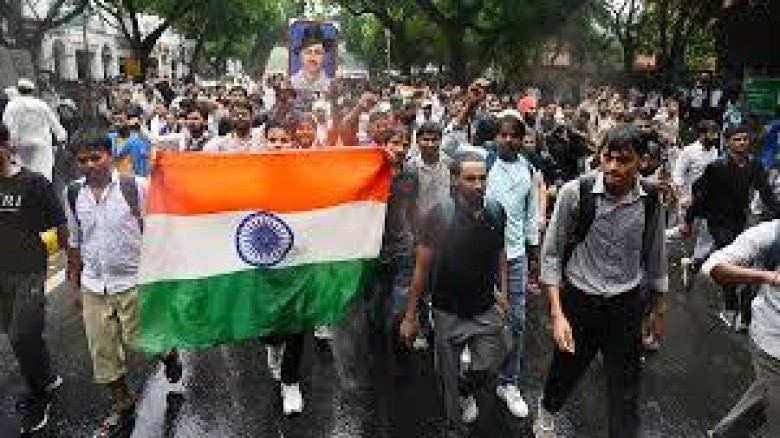 Photo: .

International Desk
India's capital, New Delhi, witnessed an
unprecedented student protest as thousands of students and young people marched
from Jantar Mantar toward Parliament, challenging one of the city's tightest
security cordons. Despite multiple barricades, the deployment of nearly 3,000
security personnel, and the suspension of internet services, protesters broke
through police barriers and reached within 100 meters of the Parliament
complex. Police later fired tear gas shells and used batons to disperse the
crowd.
The protest was organized by the online youth
group Cockroach
Janata Party (CJP), which called for a march to Parliament
demanding the resignation of Union Education Minister Dharmendra Pradhan
and a thorough investigation into the alleged NEET examination paper leak.
Thousands of students, job seekers, and young people from several Indian states
joined the demonstration.
The movement gained further momentum after
activist Sonam
Wangchuk, who had begun a 20-day hunger strike at Jantar
Mantar, was removed by police on July 18. His removal triggered widespread
solidarity, drawing more protesters to the capital.
According to The Hindu, the largely
leaderless procession moved from Jantar Mantar through Raisina Marg toward
Parliament with little resistance initially. Security forces later blocked the
route by placing buses across the road. When protesters breached the
barricades, police responded with tear gas and baton charges, leaving several
protesters and police personnel injured.
As tensions escalated, the central government
initiated talks with the protesters. After an initial attempt through the
district administration was rejected, Union Health Minister J.P. Nadda
met a delegation of CJP representatives. He described the discussions as
cordial and confirmed that the protesters had submitted their demands in
writing. The government urged them to withdraw their sit-in protest.
Meanwhile, senior leaders of the NDA
government, including Home Minister Amit Shah and Education Minister Dharmendra Pradhan,
held a series of meetings inside Parliament. Although no official statement was
released, the discussions were widely believed to focus on the NEET paper leak
controversy and the ongoing demonstrations.
A government official said security forces
had initially been instructed to avoid using force. However, after protesters
broke through barricades and advanced toward Parliament, police resorted to
tear gas and baton charges to regain control. The official also claimed that
supporters of several political parties had joined the demonstration and that
many participants had traveled from outside Delhi, particularly from Rajasthan.
Nitish, a job seeker from Uttar Pradesh's
Azamgarh district, said, "The government must be held accountable for the paper leak. After
we crossed the first barricade, we simply kept walking because no one stopped
us."
What began as a protest over the alleged NEET paper leak has now evolved into one of India's largest student demonstrations in recent years, significantly increasing political pressure on the central government.