Dhaka

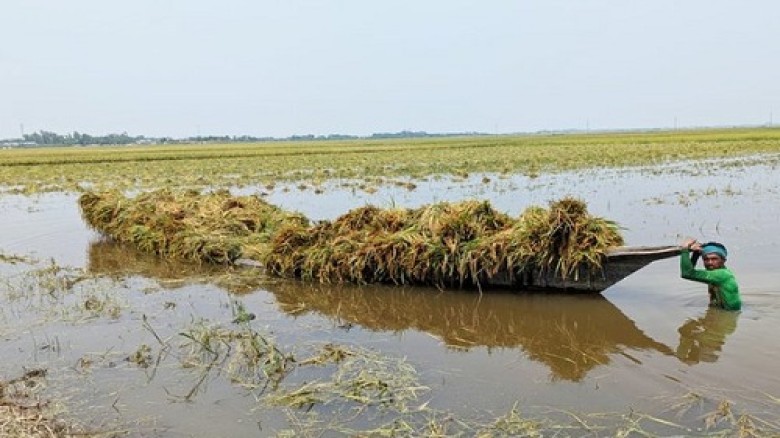 Photo: .

Online Desk
Continuous rainfall and upstream
floodwaters have created a severe crisis across Bangladesh’s haor regions,
leaving vast stretches of boro paddy fields submerged. In several districts,
especially Sunamganj, farmers are watching their only annual crop disappear
underwater.
Field reports from affected areas
show scenes of devastation. Lands that were filled with ripe golden paddy just
days ago are now covered by floodwater. Many farmers are wading through
waist-deep water in desperate attempts to harvest what remains, but in most
places the rising water has made it nearly impossible to save the crops.
According to the Department of
Agricultural Extension, at least 199 small and large haors across the country
have been affected by waterlogging. In Sunamganj alone, thousands of hectares
of paddy fields have suffered damage. Official estimates suggest potential
losses of around 50,000 tons of rice, though local farmers believe the actual
damage could be much higher.
Similar conditions are being
reported in Netrokona, Habiganj, Kishoreganj, Brahmanbaria, and Moulvibazar,
where continued rainfall and rising river levels are flooding new areas each
day.
Farmers say the rain and flash
floods arrived at the peak harvesting period, leaving them with little time to
prepare. Labor shortages, fear of lightning strikes, and severe waterlogging
have made harvesting extremely difficult. Even those who managed to cut some
paddy are struggling to dry it due to the lack of sunlight.
The Flood Forecasting and Warning
Centre has warned that flood conditions could worsen further in several
districts. Meanwhile, the Bangladesh Meteorological Department has forecast
heavy to very heavy rainfall over the coming days.
Prime Minister Tarique Rahman has
expressed concern over the situation and assured assistance for affected
farmers. He also instructed local authorities to take necessary preparedness
measures.
Experts warn that boro rice is the primary source of livelihood for haor farmers. A large-scale crop failure would not only cause economic losses but also threaten the survival and future of thousands of families in the region.