Dhaka

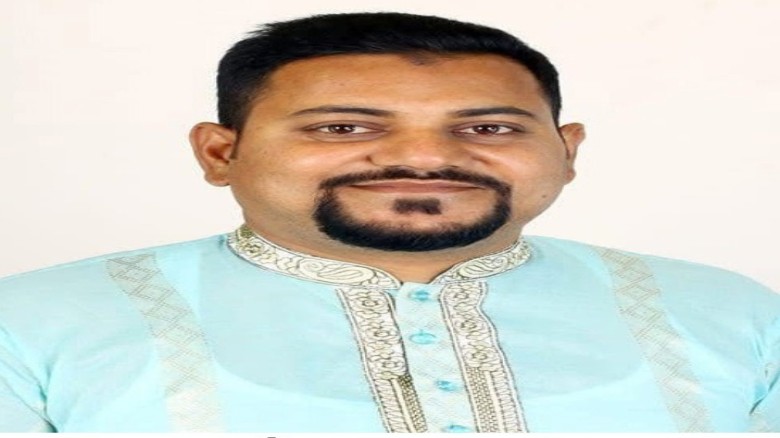
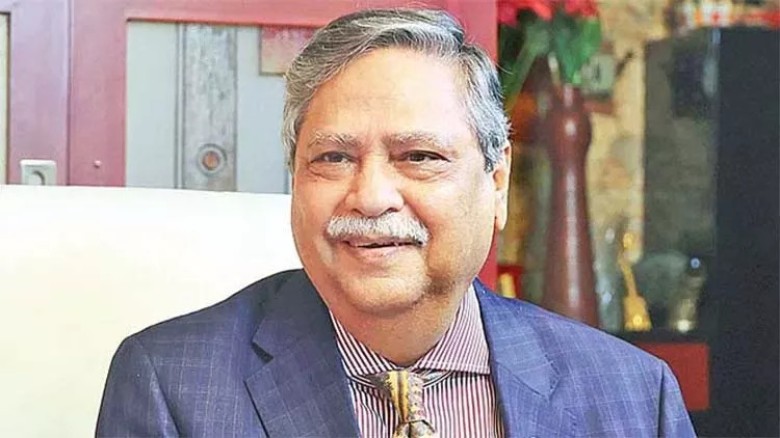
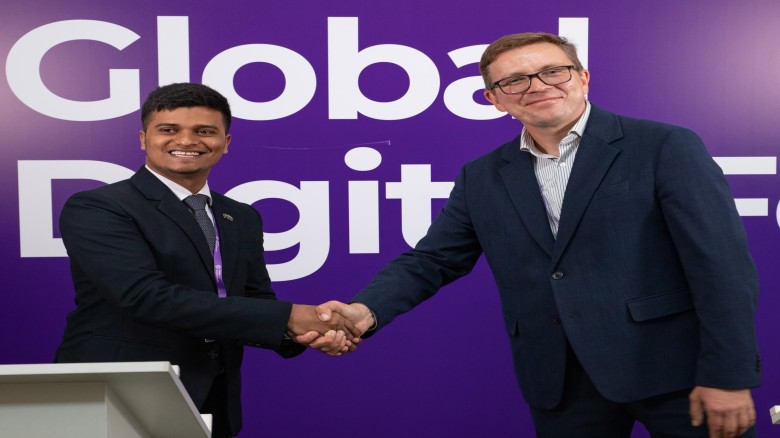 Photo: Collected

Muhammad Jubayer Hossain Is a Bangladeshi EdTech entrepreneur, digital product builder and youth leader who has represented Bangladesh at several International platforms. He previously participated in the World Youth Festival 2024 and Global Digital Forum 2025. In 2026, he has again been selected for two major International programme- the international Festival of Youth in Yekaterinburg and the Eastern Economic Forum in Vladivostok, both with full funding. He is the founder and product lead of WEBKIH & IELTS Mock Lab. His journey reflects the growing potential of Bangladeshi youth in entrepreneurship, leadership, technology and global engagement. Interviewed by Sakibul Hasan
Could you
briefly tell about your journey from Dhaka College to becoming an
entrepreneur and youth leader?
My journey has not been a
straight line. I completed my BA and MA in English from Dhaka College under the
University of Dhaka. Studying literature taught me to understand people,
communicate ideas, and view problems from different perspectives. As a student,
my interest in websites led me to start WEBKIH in 2019, where I gradually
learned web design, development, digital marketing, and product building
through real work. Later, I founded IELTS Mock Lab, an EdTech platform
supporting tens of thousands of practice tests for learners worldwide.
Alongside entrepreneurship, I served as President of the Leo Club of Dhaka and
helped lead nearly 60 community programmes. These experiences eventually
enabled me to represent Bangladesh internationally. I see English, technology,
leadership, and service as connected parts of one journey.
How did you learn about the
International Festival of Youth 2026 and the Eastern Economic Forum 2026?
After participating in the
World Youth Festival 2024 and Global Digital Forum 2025, I continued following
international youth programmes and official announcements. Through this regular
search, I learned about the International Festival of Youth 2026 in Yekaterinburg
and the Eastern Economic Forum 2026 in Vladivostok. I applied because I saw
them as platforms for learning and contribution, not simply travel
opportunities. The International Festival of Youth focuses on dialogue,
culture, and cooperation, while the Eastern Economic Forum offers exposure to
technology, entrepreneurship, economic development, and international
partnership. These areas closely connect with my work in EdTech, digital
products, and youth leadership. Their full funding also made these
opportunities accessible to me as a young Bangladeshi entrepreneur.
What was the selection
process like for these two fully funded international events?
The selection process was
competitive, involving detailed online applications and video presentations. I
highlighted my academic background, leadership and volunteer work,
entrepreneurial activities, international experience, motivation, and potential
contribution. The video was particularly important because it showed not only
my achievements but also my confidence, communication skills, personality, and
ability to represent Bangladesh. I focused on speaking naturally, using clear
English, maintaining eye contact, and sharing real examples. I presented my
community programmes, digital products, and international experiences.
Eventually, I received official confirmation that I had been selected for both
events with full funding.
Among thousands of
applicants, what do you believe made your profile stand out?
I believe my personal brand
and digital footprint played an important role. To me, personal branding is not
just a professional photo or impressive title; it is the public record of what
I consistently do. Through my website, social media, project updates, and media
coverage, people can see my work beyond the application form. Anyone searching
for me can find evidence of building WEBKIH and IELTS Mock Lab, leading nearly
60 community initiatives, working with young volunteers, and representing
Bangladesh internationally. My online presence connects these experiences into
one clear story. I believe this consistent, authentic, and searchable identity
made my profile more credible and memorable.
What are your main
expectations from participating in the International Festival of Youth 2026?
My main expectation is to
understand how young people from different countries view leadership, social
responsibility, culture, and the future. I want to listen to their experiences
and share what Bangladeshi youth are doing with limited resources but strong
determination. I also hope to find possible partners for youth projects,
digital education, and cultural exchange. I want to take part actively in
discussions and teamwork instead of remaining only an audience member. Another
important goal is to build genuine friendships that continue after the
festival.
What do you hope to learn,
contribute, and achieve at the Eastern Economic Forum 2026?
At the Eastern Economic
Forum, I want to learn how governments, businesses, technology leaders, and
young entrepreneurs think about economic cooperation and future development. I
am especially interested in digital transformation, EdTech, innovation, and the
role of young people in emerging economies. I can contribute the perspective of
a young founder from Bangladesh who has built digital services and an education
platform while working with limited resources. My goal is to gain knowledge,
build trust, and develop relationships that may grow into meaningful
cooperation over time.
How did representing Bangladesh at
the World Youth Festival 2024 and Global Digital Forum 2025 shape you?
The World Youth Festival
2024 was my first major international youth experience, and spending 18 days in
Russia changed my confidence and worldview. Meeting young people from different
cultures taught me to communicate beyond language, respect differences, and
stay true to my identity. The Global Digital Forum 2025 in Nizhny Novgorod
deepened my understanding of technology, digital cooperation, and responsible
innovation. These experiences made me more open-minded, independent, and
committed to representing Bangladesh well. They also taught me that networking
is not about collecting contacts, but about listening, building trust, and
maintaining meaningful connections beyond the event.
What have you learned from
representing Bangladesh on international platforms that you could not have
learned at home?
At home, we can read about
other countries and watch videos, but living and working with people from
different societies teaches something deeper. I learned how quickly stereotypes
disappear through genuine conversation. I also realized that representing a
country happens through small actions—being punctual, respecting others,
keeping promises, and helping people. International programmes made me more
independent, adaptable, and confident in communicating across cultural
barriers. Most importantly, I learned that I can be proud of my identity while
questioning my assumptions and continuing to learn from others.
What have been the
biggest challenges you have faced as a young entrepreneur?
The biggest challenges have
been limited capital, earning trust, finding the right team, and building
quality products at affordable prices. As a young founder, I often manage
development, marketing, customer support, product management, and accounting
myself. Reliable infrastructure, payment systems, mentorship, and access to
global markets can also be difficult. With IELTS Mock Lab, I must attract
users, maintain the platform, improve learning, and build a sustainable
business simultaneously. These challenges have taught me to use resources
wisely, learn quickly, and stay calm when things go wrong.
What are the biggest
challenges facing young people in Bangladesh today?
One major challenge is the
gap between formal education and today’s workplace skills. Many young people
earn certificates but lack practical experience in communication, technology,
problem-solving, teamwork, and project work. Access to career guidance,
mentors, and reliable opportunities is also limited, especially outside major
cities. Financial pressure and unemployment often force young people to
prioritize short-term survival over long-term learning, while social media
creates constant comparison. I believe Bangladesh does not lack talented youth;
it lacks clear pathways connecting talent with skills, confidence, networks,
and opportunities. Addressing this requires collective action from
institutions, employers, government, communities, and young people themselves.
What skills do Bangladeshi
youth need to develop to compete and collaborate on a global level?
Bangladeshi youth need a
balance of technical and human skills. Strong communication in both Bangla and
English is important, but English should be a working tool, not a measure of
intelligence. Digital literacy, responsible AI use, research, critical
thinking, problem-solving, and independent learning are increasingly essential.
Young people should also develop teamwork, project management, public speaking,
writing, and cross-cultural communication. A certificate may open a door, but a
strong portfolio shows what someone can actually do. I believe the ideal
combination is one strong professional skill, the ability to work well with
others, and a habit of continuous learning. In a rapidly changing world,
adaptability is no longer an advantage; it is a necessity.
What practical advice would
you give to young Bangladeshis who want to access international conferences,
fellowships, and fully funded opportunities?
My first advice is to build
a real record before trying to build an impressive application. Volunteer,
organize a project, conduct research, create a product, teach someone, or solve
a community problem. Keep evidence and measure the results. Follow official
programme websites, verified social pages, and former participants, and
regularly search for opportunities. Prepare your CV, passport, photos, academic
documents, certificates, biography, and a basic motivation statement in
advance. When applying, answer the exact question, use clear English, and give
specific examples instead of fashionable words. Apply early, get your
application reviewed, and never reject yourself before the organisers do.
Rejection is normal, and every application makes the next one stronger.
What is your long-term
vision for yourself, and what impact do you ultimately want to create for
Bangladesh?
I want IELTS Mock Lab and
my future projects to make quality learning and assessment more affordable and
accessible, not only in Bangladesh but also in other countries with similar
needs. I also want WEBKIH to create digital solutions, employment, and learning
opportunities for young people. Beyond business, I hope to mentor future
leaders and entrepreneurs, support youth-led community work, and contribute
useful ideas to education and public development. My study of literature keeps
me focused on people, while technology helps me work at scale. Ultimately, I
want Bangladeshi youth to be known not only as users of global technology but
also as creators, partners, and leaders.
What message would you
give to a young person?
You do not need to begin
with perfect English, expensive training, or powerful connections. Begin with
one useful skill, one small responsibility, and one honest piece of work. Use
the internet to learn, volunteer in your community, keep evidence of your
progress, and apply even when you feel uncertain. Growth may look slow from
inside your own life, but small steps build a strong story over time. Your
background is part of your context; it does not have to become the ceiling
above your future.