Dhaka

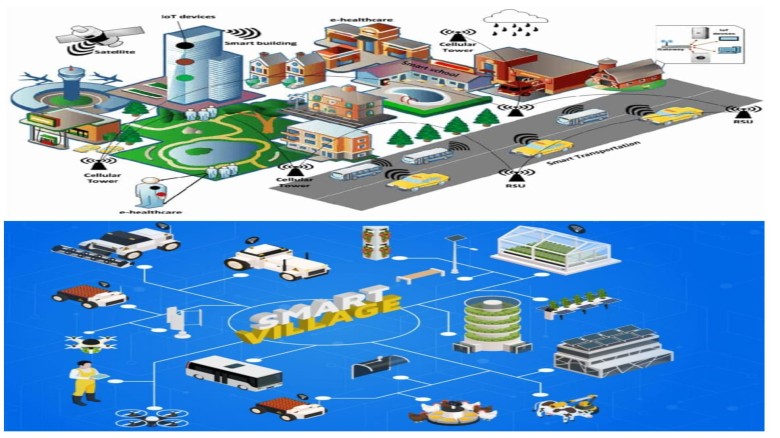 Photo: Collected

Rakib Hasan Alif
Every morning millions of people in Dhaka wake up to the same reality: endless traffic, polluted air, overcrowded streets, rising living cost, and constant struggle for the basic urban comfort. Dhaka has outgrown the capacity of the system meant to sustain it. It once seen as heart of opportunity, is increasingly becoming a symbol of urban strain. Now the question is: how do we save it before the pressure becomes irreversible? The answer lies not in making Dhaka smarter in isolation, but in breaking Dhaka's gravity by decentralizing innovation, opportunity and happiness across the country.
Urban
migration continues at alarming
rates, every year countless people migrate to Dhaka from rural areas and small
towns, driven by the belief that the capital alone offers access to
opportunity, higher-education, advanced medical core and financial progress.
This migration is driven less by attraction to Dhaka and more by the absence of
opportunity elsewhere. Smaller towns often fail to provide reliable public service,
stable employment and modern healthcare facilities, while many rural areas are vulnerable to floods,
climate pressure, poverty, and unemployment global
research confirms this pattern Jennifer
Clark's uneven innovation shows that smart city projects often reinforce
dependence on metropolitan
centers, concentrating resources in
capitals while leaving smaller towns behind. In Bangladesh this imbalance is
increasingly visible, while Dhaka moves toward digital governance, metro rail
system, and smart infrastructure cities such as Rajshahi, Khulna, and Sylhet
continue to lag behind in investment and development. As a result,
Dhaka expands into an
overcrowded megacity while
regional towns struggle
to create enough opportunities for people.
This is where
smart village becomes
critically important. A smart village
is far more that a rural area
equipped with internet connectivity or digital tools. It’s a comprehensive development framework that integrates technology, modern agriculture, entrepreneurship, healthcare, education, and digital governance to create a sustainable rural life. As researchers from the smart villages research group at the university of Cambridge observed “The quality of life in smart cities needs smart villages.” in other words no magacity can remain sustainable if rural communities continue to lack opportunity and resilience.
Agriculture remains one of the foundations of Bangladesh's economy, yet an increasing number of farmers are leaving rural communities because farming no longer offers reliable income or economic stability climate change, recurring floods and rising production costs have steadily weakened the sustainability of rural livelihoods. This is where smart agriculture becomes indispensable modern farming technologies can dramatically improve rural productivity and resilience by integrating AI-driven systems, drone surveillance automated irrigation systems, mobile advisory platforms, digital marketplaces and modern farming systems. As the Director-General of the Food and Agriculture Organization (FAO) observed, “Agriculture must get smarter to end poverty and hunger.” additionally according to a joint FAO-ITU report on artificial intelligence in agriculture, AI-based system can improve decision making and resource-intensive tasks. China's Taobao Villages offer a compelling example of how digital connectivity can revitalize rural economies. Through ecommerce platforms, rural entrepreneurs are able to market agricultural and handmade products nationwide without relying entirely on urban distribution networks.
Bangladesh has already made notable progress in digital governance through initiatives such as the Union Digital Centers, which now provide rural citizens with online access to land records, birth registration, government applications and other essential services. These reforms have improved administrative efficiency. Yet migration continues because digital access cannot overcome structural centralization. A villager may now obtain certificates or government documents online but the country's real concentration of authority, opportunity and influence remains firmly rooted in Dhaka. Major ministries, corporate headquarters, leading universities, financial institutions, and many of the nation's most prestigious careers continue to be concentrated within the capital. Even Bangladesh's regional cities remain heavily dependent on Dhaka for administrative approvals, investment allocation and institutional decision making. Effective E-government, therefore, must go far beyond the simple digitization of paper. Genuine decentralization requires empowering regional and local institutions with greater authority. One of the strongest global examples of digital decentralization can be found in Estonia, where citizens can access healthcare, education, taxation, voting systems and a wide range of government services online from virtually anywhere in the country. As a result, living outside the capital does not necessarily mean being excluded from opportunity, efficiency, or state support. Therefore, true decentralization means citizens should not be forced to migrate simply to access efficient public services and opportunity.
Despite their promises
of efficiency and modernization, many smart city projects around the world
have unintentionally reinforced existing inequalities. In her book
Uneven Innovation, Jennifer Clark argues that smart infrastructure often
becomes concentrated within already dominant metropolitan centers, allowing
capitals to advance technologically while surrounding regions continue to lag
behind. Bangladesh risks falling into the same pattern if development remains
excessively focused on Dhaka. As the capital becomes increasingly modernized,
it also becomes more attractive to migrants seeking opportunity and stability.
This creates a dangerous cycle, concentrated smart investment strengthens
Dhaka, a stronger capital attracts even more migration and rising migration
intensifies unban pressure further. Breaking this cycle requires a fundamental shift in development philosophy.
Technology should not merely make capitals more efficient, it should empower
smaller cities, towns and villages
to become more economically
and institutionally independent. The ultimate goal should not simply be smart
cities but a smart and balanced nation. Bangladesh doesn't need to concentrate all national growth within
Dhaka. Economists increasingly advocate for regional innovation systems where
multiple cities and districts develop specialized industries and interconnected
economies rather than depending entirely on a single metropolitan
center. Several countries have already demonstrated the effectiveness of this
model through more balanced and decentralized economic planning. China expended
investment into tier-2 cities such as Chengdu and Wuhan, helping reduce
excessive dependence on Beijing and Shanghai.
Meanwhile Germany distributed major economic and educational institutions
across multiple urban centers rather than concentrating everything in Berlin. In Kenya, the M-pesa ecosystem created
powerful local financial networks that expanded economic participation far
beyond Nairobi. Bangladesh could adopt a similar regional development Chittogram could strengthen its logistics and maritime industries, Rajshahi could expend agricultural innovation Khulna could
emerge as a center for climate adaptation and green industry, while Sylhet
could develop technology and tourism sectors linked to international markets.
If regional cities become economically dynamic,
they can absorb
population growth that would otherwise flow toward the capital.
Urban planners increasingly argue that development should be measured not through economic
growth, but through the quality of human life. In Happy City, urbanist Charles
Montgomery argues that truly successful cities are designed around human
well-being rather than endless physical expansion. Smaller towns and regional
cities across Bangladesh still have the opportunity to avoid repeating the
urban mistakes visible in Dhaka. Through compact neighborhoods, walkable
streets, accessible parks, local healthcare facilities, quality schools and vibrant
cultural spaces can build healthier and more socially connected communities.
This vision reflects the broader idea of decentralized happiness where
opportunity, dignity, comfort
and quality of life should not remain confined within
a single overcrowded capital. To genuinely reduce
dependence on Dhaka,
Bangladesh must move beyond temporary
urban solutions. A smart
village is not defined by technology alone but by genuine authority, developing smart agriculture linked directly to national markets,
expending telemedicine through reliable rural healthcare centers, supporting local entrepreneurship through
digital marketplace and startup ecosystems, investing in renewable energy and
improving transportation networks that connect villages efficiently with
regional cities. Global examples increasingly
show that rural regions can become engines of innovation rather than symbols of
unemployment. From India's smart village programs to China's Taobao village and
Kenya's digital financial systems, rural communities have demonstrated the
capacity to compete economically when given proper support.
Saving Dhaka cannot simply mean building more
flyovers, expanding metro rail systems, or installing smarter AI technologies
within the capital itself while such measures may temporarily ease congestion
and urban pressure, but they do not address the deeper structural imbalance
that continues pulling people toward Dhaka.
The long-term solution
lies in breaking Dhaka's gravity.
And smart villages
are not an alternative to
modernization, they are different model of modernization that distributes instead of concentrating it. If Bangladesh
invests seriously in regional empowerment and rural innovation, Dhaka can
finally begin to breathe again.
The writer is a student at Chittagong University