Dhaka

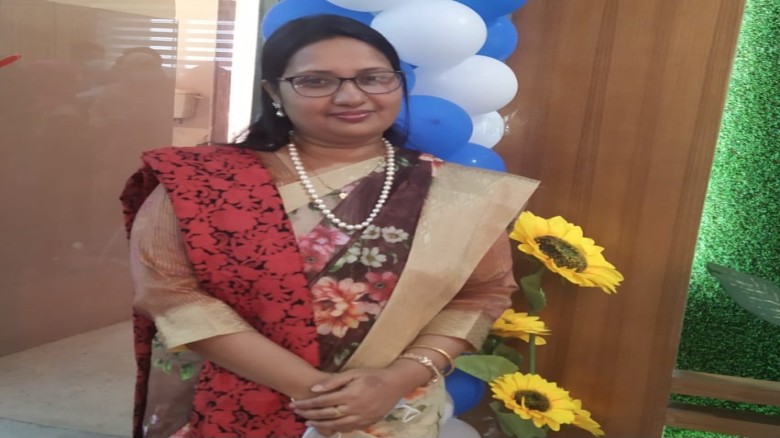 Photo: .

Dr. Mst Farhana Sharmin
Roselle belongs to the
Malvaceae family and is considered a jute-like crop. Its scientific name is Hibiscus
sabdariffa L. Cultivation of Roselle dates back to around 4000 BC in
western Africa, particularly Sudan. Later, during the 16th–17th centuries, it
spreads from Sudan to Egypt, West Africa, the Caribbean islands, and across
Asia, where it gained different names and cultural significance. Its sweet-sour flavor and health
benefits have made it popular for centuries. In ancient times, Roselle was used
as a medicinal plant. Egyptians prepared drinks from its leaves and flowers to
cool the body in hot climates. In Bangladesh, especially in the hilly regions,
Roselle has long been cultivated and is locally known as Chukur,
Chukai, Chukuri, or Mesta. Due to its climate adaptability,
short harvesting period, and relatively low production cost, Roselle is
becoming increasingly popular in Bangladesh. Vegetable Mesta is a tetraploid
plant with 72 chromosomes.
Bangladesh Jute Research
Institute (BJRI) has been playing a
leading role in the country since long ago in researching Rosella, improved
varieties, modern cultivation technology, and processing methods. From
the wild species (M-715), breeding division of BJRI selected pure lines and
developed a high-yielding vegetable variety named Vegetable Mesta (VM)-1. In
2010, the National Seed Board released it as BJRI Mesta 2 (VM-1). BJRI has developed
five varieties of Mesta among them, two are suitable as vegetables: BJRI Mesta 2
(VM-1) and BJRI Mesta 4 (VM -2). Dr. Md.
Abul Fazal Mollah, Chief Scientific Officer (CSO), Fiber Quality Improvement
Division of the BJRI, has been conducting various activities to popularize
Roselle cultivation, since 2015. His initiatives have been covered in local
newspapers and television channels. In 2017, three final-year students from the
Department of Economics at Hajee Mohammad Danesh Science and Technology
University received training and began cultivating Roselle. Later, they established
a company called Calyx Food Products Ltd., through which they started
producing Roselle and make Roselle tea. They participated in the Student to
Startup program organized by Young Bangla and became runners-up among 2,250
teams. Their success story was widely published in different newspapers.
The students acknowledged
that Dr. Md. Abul Fazal Mollah, Principal Scientific Officer of BJRI Jute
Research Regional Station, Rangpur, guided and supported them in cultivating
Mesta (Roselle). With his assistance, they first cultivated Roselle on 4 bighas
of land in Sathia, Pabna, harvesting 3.5 tons of raw calyx. After processing,
they obtained 320 kg of calyx, with an estimated market value of 1.2 million
BDT. Continuing this initiative, Dr. Mollah collected Roselle flowers, removed
the seeds, thoroughly cleaned the calyx, dried them, and stored them. These
dried calyces can be used year-round to make tea. To prepare Roselle tea, dried
flowers are boiled in a cup of hot water for five minutes over medium heat.
Honey or lemon juice can be added, and the tea can be enjoyed either hot or
cold. Dr. Mollah, through various trainings, workshops, seminars, and fairs,
has popularized the process of food product development and the importance of
Roselle. Later, many entrepreneurs emerged, including Shahidul Islam from the
medicinal village of Natore. Today, its popularity is steadily increasing,
visible in advertisements on social media platforms (Facebook, Instagram) and
television.
Roselle, or Chukur,
is a versatile medicinal plant with stems, leaves, and flowers rich in
therapeutic properties. Beyond its use as food and drink, it has been employed
in traditional and evidence-based medicine since ancient times. Roselle flowers
contain abundant bioactive compounds such as anthocyanins, phenolic compounds,
organic acids, flavonoids, vitamin C, and Protocatechuic acid all of which
exhibit antioxidant, anti-inflammatory, and Cardioprotective effects. We, the scientists of the Post-Harvest Processing Department of the Fiber Quality Improvement Division,
of BJRI, are working on the scientific research of making
tea or drinks from rosella calyx, including jam, jelly, pickle, chutney,
rosella essence, juice. We have also started research on the bioactive component’s
identification of rosella leaves and their use as feed additives in poultry,
with the funding of the Krishi Gobeshona Foundation (KGF).
Roselle tea is not only
valuable but also highly nutritious. Drinking this tea helps reduce the risk of
diabetes, heart disease, and aids in weight management. This tea is rich in antioxidants that help prevent
cancer, delay cell aging, and boost immunity. Not only that, but because it
contains a lot of vitamin C, Roselle tea relieves various types of pain. Roselle
tea is not just a drink, but part of a healthy lifestyle. Its sweet-sour taste
brings freshness to the new day. This valuable drink is directly related to
health and wellbeing and there is a vast scope to extend this commercial
venture.
Senior
Scientific Officer
Post-Harvest
Processing Department
Fiber
Quality Improvement Division
Bangladesh
Jute Research Institute (BJRI)
Manik Mia Avenue, Dhaka 1207