Dhaka

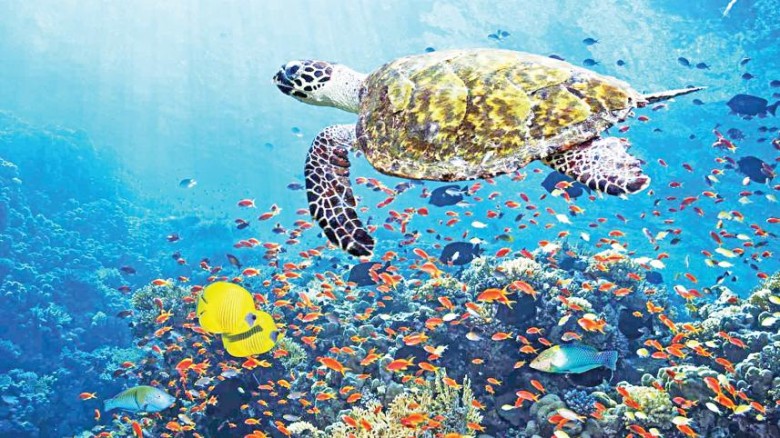 Photo: Daily Star

Sakibul Hasan
A new international treaty governing biodiversity in the
high seas has entered into force, creating a global framework for protecting
marine life beyond national jurisdiction. For Bangladesh, a coastal country
whose economy and livelihoods are closely linked to the Bay of Bengal, the
agreement raises an important question: how prepared is the country to benefit
from the new system of ocean governance?
The Biodiversity Beyond National Jurisdiction (BBNJ)
Agreement, also known as the High Seas Treaty, entered into force on January
17, 2026. Its first Conference of the Parties (COP1) is scheduled to take place
at the United Nations Headquarters in New York from January 11 to 22, 2027. The
treaty aims to strengthen the conservation and sustainable use of marine
biodiversity in areas beyond national jurisdiction. Bangladesh signed the
agreement in September 2023 and ratified it on September 26, 2024, becoming a
party to the treaty.
What the High Seas
Treaty Covers
The BBNJ Agreement focuses on four major areas: marine
genetic resources and the fair and equitable sharing of benefits, area-based
management tools including marine protected areas, environmental impact assessments,
and capacity-building and the transfer of marine technology.
For Bangladesh, however, becoming a party to the treaty is
only the first step. The country now faces the challenge of developing the
scientific and institutional capacity needed to participate effectively in the
new system of international ocean governance.
Bangladesh’s Marine
Resources and the Capacity Gap
Bangladesh has significant maritime resources in the Bay of
Bengal. According to the World Bank, the country’s maritime area covers more
than 118,000 square kilometres. Yet marine fishing remains concentrated largely
in relatively shallow waters.
The World Bank estimates that Bangladesh’s marine fishing
activities are mainly concentrated up to depths of around 80 metres, covering
roughly one-third of the country’s Exclusive Economic Zone. It also identifies
around 14,600 square kilometres of commercially important fishing grounds as
being under pressure from overfishing.
What species are found where? How are fish stocks changing?
How are ocean temperature and water chemistry affecting marine habitats? And
how much of this information is being systematically collected and used in
policymaking? These questions are becoming increasingly important as the BBNJ
framework moves from negotiation to implementation.
Why Marine Genetic
Resources Matter
One of the most significant elements of the BBNJ Agreement
is its focus on marine genetic resources.
Marine organisms can contain genetic characteristics with
potential applications in medicine, biotechnology and other scientific fields.
The treaty establishes a framework intended to ensure that benefits arising
from marine genetic resources are shared fairly and equitably.
For developing countries such as Bangladesh, this raises
both opportunities and concerns. Access to marine research, technology and
scientific expertise could open new avenues for research. But without adequate
laboratories, trained researchers and access to marine data, developing
countries may struggle to participate fully in this emerging field.
Science Will Be
Central to Implementation
The implementation of the BBNJ Agreement will depend heavily
on scientific knowledge. The UNESCO Intergovernmental Oceanographic Commission
has highlighted the importance of ocean observations, biodiversity databases,
scientific cooperation and capacity development in implementing the treaty.
For Bangladesh, this means strengthening marine research and
improving coordination among universities, research institutions and government
agencies.
Long-term monitoring could help identify changes in species
distribution, fish populations, ocean conditions and marine habitats. But
collecting data is only one part of the challenge. The information also needs
to be accessible and translated into evidence that policymakers can use.
The Treaty Will Not
Solve All of Bangladesh’s Marine Problems
The BBNJ Agreement applies to areas beyond national
jurisdiction. It therefore does not directly regulate all environmental
problems within Bangladesh’s territorial waters or Exclusive Economic Zone.
Issues such as coastal pollution, overfishing, habitat
degradation and the management of Bangladesh’s own marine resources will
continue to depend on national policies, enforcement, scientific monitoring and
regional cooperation. This distinction is important. The High Seas Treaty
should not be presented as a solution to every environmental challenge facing
the Bay of Bengal.
What Could Bangladesh
Bring to the COP1 Discussion?
The first Conference of the Parties in January 2027 will be an important test of how the treaty will work in practice. For Bangladesh, several issues deserve attention: access to marine technology, capacity-building for developing countries, scientific cooperation, equitable benefit-sharing from marine genetic resources and participation in international marine research. There is also a broader question: how can the experiences and interests of coastal communities be reflected in international ocean governance?
From the Bay of
Bengal to the High Seas
Bangladesh’s participation in the BBNJ process offers an
opportunity to connect its national marine priorities with the wider
international effort to conserve ocean biodiversity.
But meaningful participation will require more than
diplomatic engagement. Bangladesh needs stronger marine research, better
long-term biodiversity data, greater access to technology and stronger
coordination among institutions.
The High Seas Treaty cannot by itself protect Bangladesh’s
coastal waters or solve the pressures facing the Bay of Bengal. But it creates
a new international framework through which countries can cooperate on marine
biodiversity, scientific research and conservation.
For Bangladesh, the challenge now is to turn its status as a
party to the treaty into meaningful participation—by strengthening science,
improving access to marine information and ensuring that the interests of a
developing coastal country are represented in the emerging system of global
ocean governance.
The future of the high seas may seem distant from
Bangladesh’s shores. But the decisions made there could shape how marine
biodiversity is studied, protected and shared for generations to come.