Dhaka

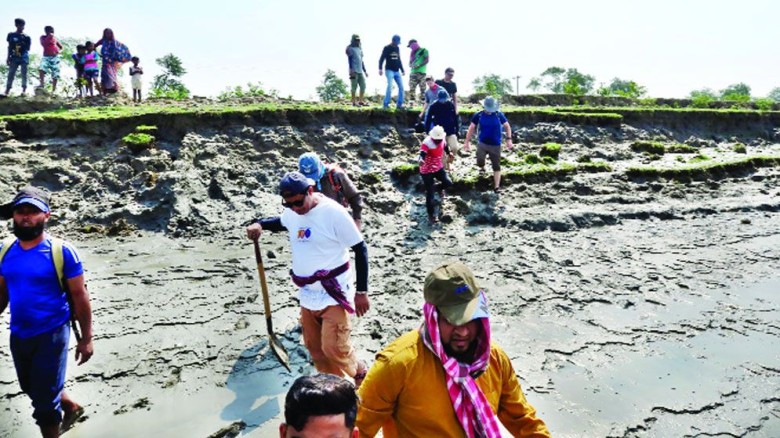 Photo: .

Princh Mondal olif, Bagerhat Correspondent
Scientists
have discovered two large underground freshwater reserves beneath the
Sundarbans and nearby coastal areas of Bangladesh, offering new hope for
millions of people facing a severe shortage of safe drinking water.
The
discovery was revealed in a recent study published in the journal Nature
Communications. The research was conducted jointly by scientists from Columbia
University, the University of Dhaka, and the New Mexico Institute of Mining and
Technology.
For
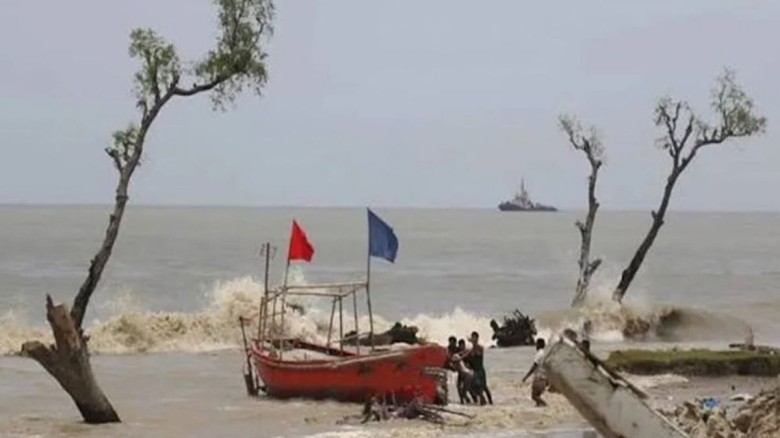
many years, people living in the coastal districts of Khulna, Bagerhat, and
Satkhira have struggled with increasing salinity caused by climate change,
sea-level rise, and reduced freshwater flow. As a result, many shallow tube
wells no longer provide safe drinking water, forcing residents—especially
women—to travel long distances to collect freshwater.
Researchers
surveyed about 120 kilometers of land from Khulna to the Pashur River basin and
collected data from 25 locations. Their findings confirmed the existence of two
major freshwater-bearing layers extending across nearly 80 kilometers.
According
to the study, the freshwater was stored underground thousands of years ago
during the Ice Age. Rainwater and freshwater carried by the Ganges and
Brahmaputra rivers became trapped in sandy layers beneath the ground and were
later protected by thick clay deposits.
The
first freshwater reserve extends to a depth of around 800 meters and covers
about 40 kilometers. The second reserve lies beneath the central Sundarbans at
depths ranging from 25 to 250 meters and stretches for another 40 kilometers.
However,
experts warn that this water is an ancient resource, estimated to be between
10,000 and 25,000 years old. It is not quickly renewable and should not be used
for large-scale irrigation or commercial purposes.
Professor
Dr. Anwar Hossain Bhuiyan of the University of Dhaka emphasized that the
reserves should be treated as a strategic water resource and carefully
protected for future generations. Scientists also warned that uncontrolled deep
tube-well installation could allow salty water to enter the freshwater layers,
damaging the resource permanently.
Experts
have called for science-based policies, strict monitoring, and further surveys
in other vulnerable coastal districts, including Patuakhali, Barguna, Bhola,
Noakhali, and Chattogram.
While
the discovery offers a promising solution to the region’s long-term water
crisis, researchers stress that careful management and conservation will be
essential to ensure this valuable resource remains available for future
generations.